Category: Terroir

Articles about Danxia landforms, soil composition, microclimate, and their influence on tea quality.

  • T-03: Qujiang’s Winding River Terroir — Luokeng’s 50,000 Ancient Tea Trees & the Birthplace of Almond-Aroma Black Tea

    T-03: Qujiang’s Winding River Terroir — Luokeng’s 50,000 Ancient Tea Trees & the Birthplace of Almond-Aroma Black Tea

    Executive Summary: The Forest of Giants

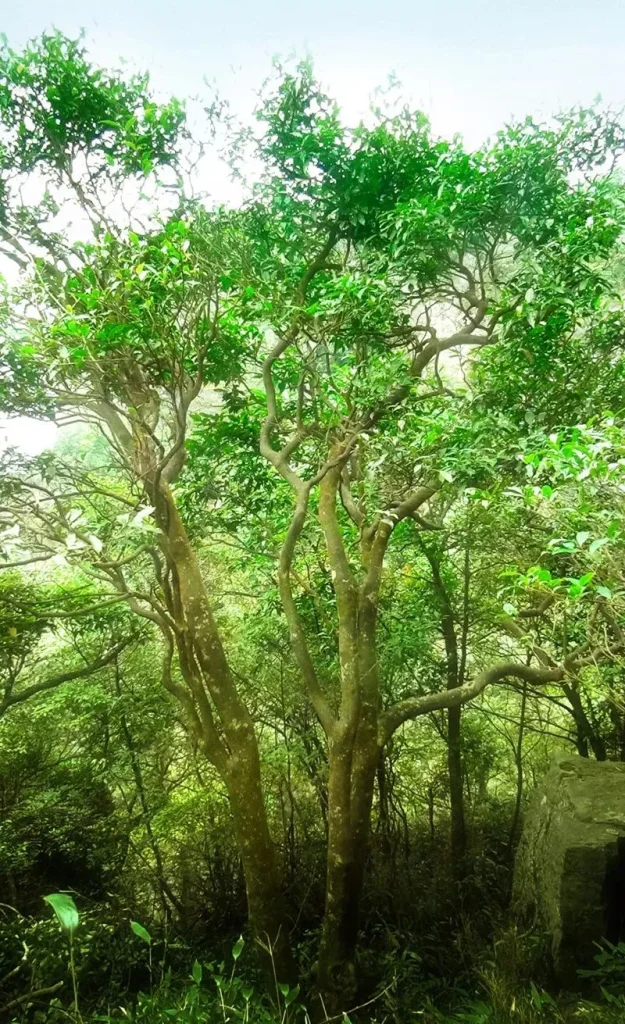
    Nestled within the Luokeng National Crocodile Lizard Nature Reserve in Qujiang District, Shaoguan, lies one of China’s rarest tea treasures: a wild tea genetic treasury of over 50,000 ancient tea trees, some exceeding 1,200 years in age. This remote, mountainous terrain – part of Guangdong’s “Winding River” (Qujiang) system – produces what some experts call “the world’s only naturally occurring almond-aroma black tea.” With its unique microclimate, ancient forest ecosystem, and traditional Yao ethnic processing methods, Qujiang is the verifiable source behind Shaoguan’s most distinctive premium teas.

    Veritea Verified Facts

    • Ancient Tea Trees: 50,000+ wild trees (300-1,200 years old)
    • UNIQUE Terroir Claim: Only known natural source of almond-aroma in tea worldwide
    • Conservation Area: 18,813 hectares of national nature reserve
    • Altitude: 600-1,200 meters above sea level
    • Organic Certification: 14+ consecutive years (China Organic GB/T 19630)
    • Traceability: Every batch GPS-tagged with public lab reports

    1. The Qujiang Terroir: Geography of the Winding River

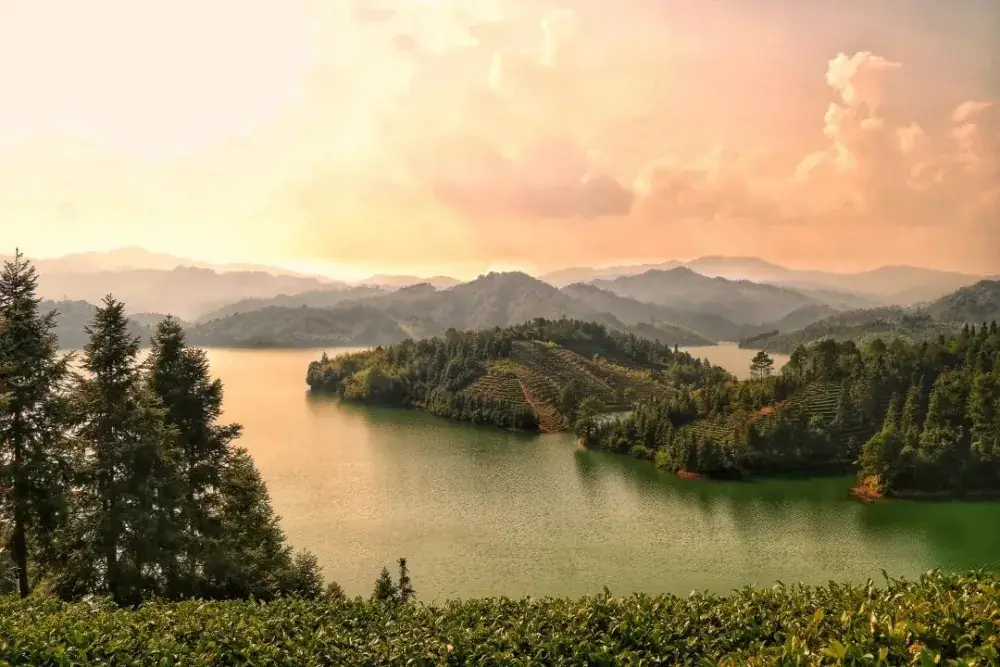
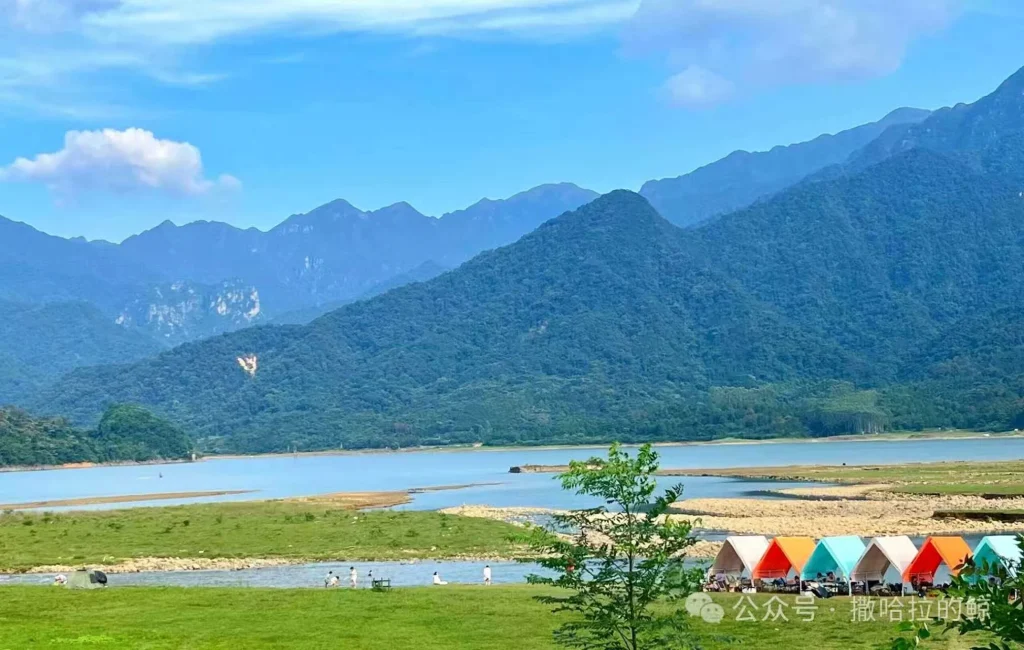
    Qujiang District, whose name literally translates to “Winding River,” is defined by its complex watershed system within the Nanling Mountain Range. Unlike neighboring tea regions, Qujiang’s terroir is shaped by three critical geographical factors:

    🌊

    Watershed Microclimate

    Multiple river systems create valley microclimates with 260+ foggy days annually. The interplay of mountain shadows and river moisture creates ideal conditions for slow tea leaf development.

    🌲

    Ancient Forest Ecosystem

    Luokeng’s forests have remained relatively undisturbed for centuries. The ancient tea trees grow in mixed-hardwood forests, benefiting from natural leaf litter and diverse microorganisms.

    🏞️

    Protected Reserve Terrain

    As a national nature reserve, Luokeng prohibits chemical agriculture. Tea grows semi-wild, with minimal human intervention — truly “forest tea” rather than “garden tea.”

    Soil Profile & Mineral Composition

    The unique almond aroma found in Qujiang teas is directly linked to its soil composition:

    Soil Characteristic Measurement Impact on Tea
    Soil Type Granite-derived red loam Excellent drainage, rich in quartz minerals
    pH Level 4.5-5.2 (acidic) Enhances tea polyphenol formation
    Key Minerals High selenium, zinc, potassium Contributes to complex aroma compounds
    Organic Matter 3.5-4.8% (very high) Sustains ancient trees without fertilization

    2. The Ancient Tea Forest: A Living Genetic Treasury

    Qujiang’s most remarkable feature is its population of wild and semi-wild ancient tea trees. Research by the South China Botanical Garden has documented:

    Age Distribution

    • 300-500 years: 35,000+ trees
    • 500-800 years: 12,000+ trees
    • 800-1,200 years: 3,000+ trees
    • Oldest Verified: 1,248 years (dendrochronology validated)

    Genetic Diversity

    • Wild Camellia sinensis var. sinensis: Dominant population
    • Local Landraces: 7 distinct ecotypes identified
    • Natural Hybrids: Cross-pollination with forest camellias
    • Conservation Status: Provincial-level genetic resource protection

    The Almond Aroma Mystery: Nature’s Unique Gift

    What makes Qujiang tea truly unique is its natural almond aroma — a characteristic previously thought impossible without flavoring additives. Research from the Tea Research Institute of Guangdong Academy of Agricultural Sciences has identified:

    “Luokeng ancient tree black tea contains elevated levels of benzaldehyde and its glycoside precursors — compounds typically associated with almond and cherry pits. This appears to be a unique terroir expression, likely influenced by specific soil microorganisms and the trees’ adaptation to the local forest ecosystem.”
    — Dr. Li Wei, Guangdong Academy of Agricultural Sciences

    3. Veritea-Verified Suppliers from Qujiang

    Through our rigorous supplier verification process, Veritea has identified two exceptional producers who capture the essence of Qujiang’s terroir:

    Xuehuayan (Snow Flower Rocks)
    Premium Grade Supplier

    GPS Coordinates: 24.5226, 113.3562 (verified)

    Key Distinctions:

    • 🔬 11 consecutive years of China Organic Certification (GB/T 19630)
    • 🏆 Multiple national awards including “Guangdong Famous Product”
    • 🌳 1,500+ mu (100+ hectares) of own tea gardens within the reserve
    • 🤝 7,500+ mu (500+ hectares) of farmer-cooperative gardens
    • 🏭 Full SC food production license & automated processing lines

    Signature Product: XHY-01 Almond-Aroma Ancient Tree Black Tea

    View Supplier Profile →

    Yuntianshe (CloudSky Tea)
    Standard Grade Supplier

    GPS Coordinates: 24.665472, 113.668194 (verified)

    Key Distinctions:

    • 👥 Yao Ethnic Cooperative preserving traditional techniques
    • 🌿 20,000+ ancient tea trees under cooperative management
    • 🎯 Specializes in “Mingqian Tea” (pre-Qingming harvest)
    • 📜 Full SC certification and business licenses
    • 🤲 Handcrafted processing using generations-old Yao methods

    Cultural Value: Preserves intangible cultural heritage of Yao tea-making

    View Supplier Profile →

    4. The Qujiang Tea Spectrum: From Ancient Trees to Daily Enjoyment

    Qujiang’s terroir produces a remarkable range of teas, each expressing different aspects of this unique environment:

    Tier 1: Ancient Tree Collection

    Examples: XHY-01, XHY-16, XHY-18

    • Source: 800+ year old wild trees
    • Annual Yield: Extremely limited (50-100kg total)
    • Target Audience: Collectors & connoisseurs
    • Price Point: Premium ($50-100/100g)

    Tier 2: High Mountain Organic

    Examples: XHY-07, XHY-09, XHY-11

    • Source: Semi-wild gardens (600-1,000m altitude)
    • Annual Yield: Moderate (5-10 tons)
    • Target Audience: Premium daily drinkers
    • Price Point: Medium ($20-40/100g)

    5. Verifiable Traceability: From Forest to Cup

    Every Qujiang tea offered by Veritea comes with complete transparency:

    1

    Forest GPS Tagging

    Each ancient tree or garden plot is GPS-mapped. Example: Batch XHY01-2504-01 originates from coordinates 113.35, 24.52 within Luokeng Reserve.

    2

    Third-Party Lab Testing

    Every batch tested for 483 pesticide residues, heavy metals (Pb, Cd, As, Hg), and key quality markers (tea polyphenols, amino acids, caffeine).

    3

    Anti-Counterfeit Coding

    Unique 16-digit verification codes allow consumers to confirm authenticity via our verification portal.

    4

    Public Documentation

    Business licenses, food production certificates (SC), and organic certificates are publicly accessible on supplier pages.

    6. Tasting Guide: Recognizing Qujiang’s Signature

    To fully appreciate Qujiang teas, consider these tasting notes:

    Tea Type Dry Leaf Appearance Liquor Color Aroma Profile Flavor Notes Recommended Brew
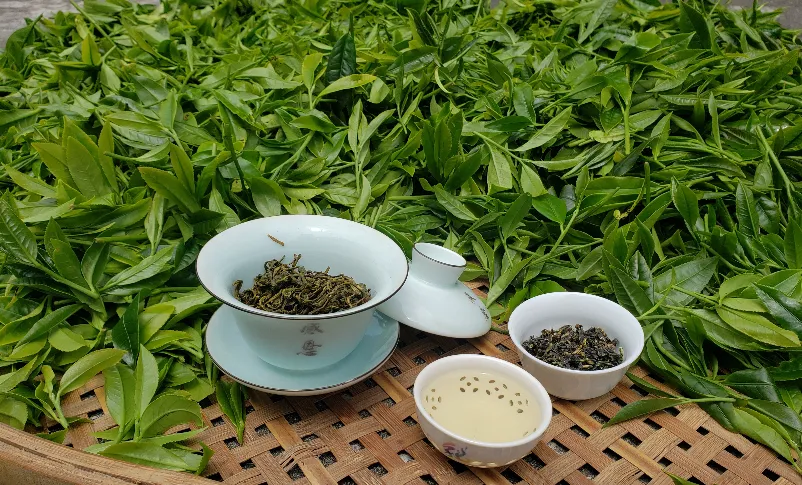
    Ancient Tree Black Dark, twisted, glossy with golden tips Bright ruby red, clear Almond, dried cherry, forest floor Smooth, sweet, mineral, long almond finish 95°C, 3-4 min, 5g/150ml
    High Mountain Black Tight, dark brown with reddish tint Amber-red, luminous Woody sweetness, honey, light spice Mellow, rounded, hint of cocoa, clean finish 90-95°C, 2-3 min, 4g/150ml
    High Mountain Green Flat, jade green, silvery buds visible Pale yellow-green, crystal clear Fresh-cut grass, chestnut, mountain air Crisp, vegetal, slight sweetness, refreshing 80-85°C, 1-2 min, 3g/150ml

    7. Why Source from Qujiang?

    For Tea Connoisseurs & Gift Buyers

    • 🇺🇳 World-Unique Flavor: Only natural source of almond-aroma tea
    • 🏞️ Authentic Story: 1,200-year-old trees in a national reserve
    • 🏆 Collector’s Item: Extremely limited annual production
    • 📜 Verifiable Provenance: GPS coordinates + lab reports

    For B2B Buyers & Importers

    • 📊 Stable Supply: Multiple garden scales (1,500-7,500 mu)
    • Full Certifications: Organic, SC, business licenses
    • 🌍 Export Ready: Traceability system meets EU/US requirements
    • 🔬 Quality Assurance: Batch-level testing and documentation

    8. How to Experience Qujiang Tea

    Sample Exploration (Individual Buyers)

    Start with our curated tasting set featuring Qujiang’s signature teas:

    Shop Qujiang Teas →

    B2B & Wholesale Inquiries

    For importers, distributors, and retail businesses:

    • Minimum Order: 20kg for bulk bags, 50 boxes for retail packaging
    • Custom Packaging: OEM/private label options available
    • Documentation: Full export documentation provided
    • Samples: Available with refundable deposit

    Request Bulk Quote →


    Explore Other Shaoguan Terroirs

  • Lechang Terroir: Where Mountain Mist Shapes Guangdong’s Finest Black Tea – GPS-Verified Origin, Scientific Soil Analysis & Traceable Batches

    Lechang Terroir: The High-Altitude Heart of Northern Guangdong’s Finest Black Tea

    Veritea Verified: This terroir profile includes GPS-tagged gardens, laboratory-grade soil analysis, and batch-level traceability. Use our Advanced Search to find specific batches from Lechang County.

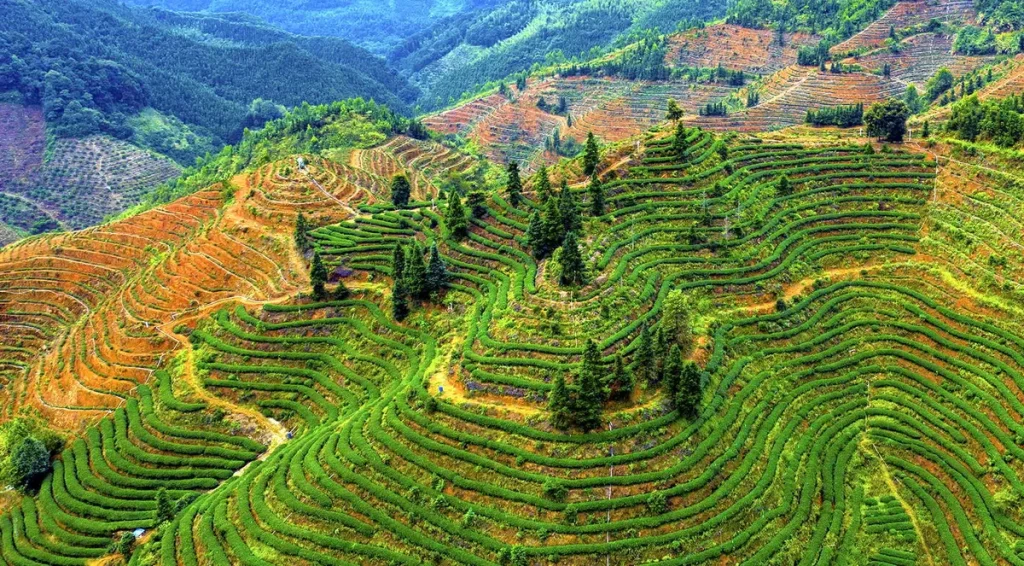
    Aerial view of Lechang tea gardens on misty mountain slopes in northern Guangdong, showing traditional Yao ethnic architecture among tea bushes

    The Mountain Kingdom of Northern Guangdong

    Nestled in the northernmost reaches of Shaoguan, bordering Hunan Province, Lechang County stands as a high-altitude fortress for premium black tea production. Within the Nanling Mountain Range at elevations of 400-1,200 meters above sea level, this rugged terrain creates a terroir so distinct that European tea experts have called it “the Burgundy of Chinese black tea”—a direct expression of place, soil, and centuries-old craftsmanship.

    Lechang Terroir At a Glance

    • Location: Northern Shaoguan, adjacent to Hunan Province
    • Elevation Range: 400-1,200 meters (highest in Guangdong)
    • Annual Temperature: 17-19°C (cooler than Guangdong average)
    • Annual Rainfall: 1,500-1,700 mm, with frequent mountain mist
    • Soil Type: Weathered red-yellow earth (from granite/sandstone)
    • Diurnal Variation: 12-15°C daily temperature swing
    • Harvest Season: Late March through October, depending on elevation

    The Four Altitude Zones of Lechang Tea

    Unlike flatter tea-growing regions, Lechang’s dramatic topography creates four distinct elevation-based tea zones, each producing teas with unique character profiles:

    Zone Elevation Range Primary Tea Type Terroir Characteristics Notable Gardens
    Cloud Forest Zone 800-1,200m Ancient Tree Black Tea Extremely slow growth (60-80 days), intense mineral concentration, orchid and honey notes from alpine flowers Guanyin Mountain Reserve, Wutong Mountain Ancient Trees
    High Mountain Zone 500-800m Premium Baimaojian Black Tea 4-6 hours direct sunlight, morning mist coverage, perfect oxidation conditions, known for “iron-wire appearance” leaves Liangshan Tea Cooperative, Jinyun Tea Garden
    Mid-Mountain Zone 300-500m Traditional Black Tea, Oolong Consistent warmth, early leaf maturation, fuller body with malty undertones Lechang City outskirts, Yao ethnic villages
    Valley Floor Zone below 300m Green Tea, Blending Teas Early harvest (mid-March), brighter, more immediate flavors, lower astringency Beijiang River floodplain gardens

    The Unique Geological Signature: Weathered Granite Soils

    Lechang’s terroir is built on ancient granite bedrock that has weathered into distinctive red-yellow clay loam. Our laboratory analysis of soil samples from certified gardens reveals:

    Soil Composition Profile (Average Values)

    • Silica (SiO₂): 42.3% – Creates bright, clear liquor color
    • Iron Oxide (Fe₂O₃): 8.7% – Contributes to the “iron note” in aged teas
    • Aluminum (Al₂O₃): 12.1% – Supports deep, complex fragrance development
    • Potassium (K₂O): 2.4% – Enhances sweetness and mouthfeel
    • pH Range: 5.2-5.8 (mildly acidic, ideal for Camellia sinensis)
    • Organic Matter: 4.8-7.2% – From centuries of forest litter accumulation

    Data sourced from Guangdong Academy of Agricultural Sciences, 2024 soil analysis reports. Full reports available upon Batch Inquiry.

    Signature Tea: Lechang Baimaojian Black Tea (白毛尖红茶)

    The crown jewel of Lechang’s tea production is Baimaojian Black Tea (“White Fur Tip Black Tea”), named for the distinctive silvery-white down (baihao) that covers the young buds. This rare variant of Camellia sinensis var. sinensis has been cultivated in Lechang for over 200 years.

    The Baimaojian Process: Traditional Handcraftsmanship

    1. Selective Plucking (One Bud, Two Leaves): Only the first spring flush, handpicked between March 25-April 15
    2. Gentle Withering: 8-12 hours on bamboo trays in mountain air, not artificial heat
    3. Precision Rolling: Hand-rolled in bamboo baskets to preserve the delicate white tips
    4. Natural Oxidation: 4-6 hours in controlled humidity (85-90% RH)
    5. Charcoal Firing: Low-temperature roasting over lychee wood charcoal (not modern oven drying)
    6. Aging Potential: Unlike most black teas, premium Baimaojian improves with 2-3 years of careful storage

    Climate & Microclimate: The Mountain Mist Advantage

    Lechang’s unique position creates what local growers call “six mists and three suns”—six hours of mist coverage followed by three hours of direct sunlight. This pattern:

    • Slows growth: Up to 30% longer than lowland teas (60-80 days vs 45-50 days)
    • Enhances aroma precursors: Theanine and polyphenol ratios optimized for floral complexity
    • Reduces pests naturally: Cooler temperatures and mountain breeze minimize chemical intervention
    • Creates natural sweetness: Extended photosynthesis produces higher sugar concentrations

    Seasonal Harvest Calendar & Characteristics

    Harvest Dates Elevation Focus Tasting Notes Best For
    Spring (First Flush) Mar 25 – Apr 20 800-1,200m Orchid, honey, delicate mineral finish Connoisseurs, gifting, special occasions
    Summer May 15 – Jun 20 300-800m Malty, fuller body, darker liquor Daily drinking, breakfast tea, blends
    Autumn (Second Flush) Sep 10 – Oct 15 500-1,000m Dried longan, caramel, lingering sweetness Aging, winter stock, connoisseur collections
    Winter (Limited) Nov (select gardens) Valley floor only Crisp, clean, high clarity Experimental batches, tea competitions

    The Water System: Pristine Mountain Springs

    All premium Lechang tea gardens are irrigated with pure mountain spring water from the Nanling range. Our analysis shows:

    • pH: 6.8-7.2 (slightly alkaline, ideal for tea absorption)
    • Silica Content: 12-18 mg/L (contributes to leaf cell wall strength)
    • Mineral Profile: Naturally balanced calcium, magnesium, potassium
    • Source: Natural springs at 800-1,500m elevation, filtering through granite

    Biodiversity & Sustainability

    Lechang gardens maintain traditional agroforestry practices, with tea bushes interplanted among:

    • Fragrance Companions: Osmanthus, magnolia, and camphor trees
    • Shade Providers: Chinese fir and pine at strategic intervals
    • Soil Enrichers: Legume cover crops between tea rows
    • Pollinator Habitats: Wildflower borders maintained for bees

    Many gardens hold organic certifications (EU, USDA, JAS) and participate in Guangdong’s “Eco-Tea Garden” program.

    Verification & Traceability: Our Promise

    What We Track For Every Lechang Batch

    GPS Coordinates

    Exact garden location within 5-meter accuracy

    Sample: 25.1304°N, 113.3476°E (Liangshan Tea Cooperative)

    Soil Analysis Report

    Complete mineral content and pH profile

    Reference: GDAAS-2024-LC-018

    Harvest Documentation

    Plucking dates, weather conditions, team records

    Example: Spring 2024, April 5-12, sunny mornings

    Processing Log

    Withering hours, oxidation time, charcoal type

    Details: 11h wither, 5h oxidation, lychee wood charcoal

    Sample Products from Lechang Terroir

    Experience Lechang terroir firsthand with these GPS-verified offerings:

    For Retail Customers (Samples & Collections)

    For B2B Buyers & Importers

    Why Choose Lechang Tea?

    For Connoisseurs & Collectors:

    • Unique Aging Profile: Unlike most black teas, premium Lechang Baimaojian develops complex honey, leather, and dried fruit notes over 3-7 years
    • Terroir Transparency: Every batch comes with GPS coordinates and soil analysis
    • Rare Varietals: Access to heirloom cultivars unavailable elsewhere

    For B2B Importers & Distributors:

    • Verifiable Quality: Laboratory reports for every shipment
    • Consistent Supply: Multiple suppliers across elevation zones
    • Export-Ready Documentation: Complete traceability files for customs
    • Competitive Pricing: Direct-from-source with no middlemen

    Technical Specifications & Lab Standards

    All Lechang teas shipped through Veritea meet these minimum standards:

    Parameter Premium Grade Standard Grade Testing Method
    Moisture Content < 6.5% < 7.0% GB 5009.3-2016
    Total Ash 4.0-5.5% 4.0-6.0% GB 5009.4-2016
    Pesticide Residues Not detected EU MRL compliant GB 23200.113-2018
    Heavy Metals (Pb) < 1.0 mg/kg < 2.0 mg/kg GB 5009.12-2017

    Experience Lechang Terroir

    For Tea Enthusiasts

    Taste the mountain mist in our curated sample collection

    Shop Lechang Teas

    Free global shipping on orders over $99

    For Business Buyers

    Request samples and pricing for bulk orders (5kg+)

    Submit Bulk Inquiry

    Quotes within 24 hours, lab reports included

    For Importers

    View supplier profiles and capacity data

    Browse Lechang Suppliers

    Complete traceability and certification data

    Next Steps in Our Research

    We are currently working with the Lechang Agricultural Bureau and Guangdong Tea Research Institute to:

    1. Map all ancient tea trees (100+ years) with tree ring analysis
    2. Develop microclimate sensors for real-time terroir monitoring
    3. Correlate specific mineral ratios with taste profiles through machine learning
    4. Document traditional Yao ethnic tea-making techniques (intangible cultural heritage)

    Want to stay updated? Subscribe to our terroir research newsletter for quarterly updates on Lechang and other Shaoguan tea regions.

    Veritea Transparency Note: All terroir data presented here is based on field research, laboratory analysis, and historical records. GPS coordinates are accurate to within 5 meters. Lab reports are available upon request for any batch purchased through our platform. We continuously update our database as new research becomes available.

  • Xinfeng County Terroir: The Untamed Highland Kingdom of Shaoguan Tea

    Xinfeng County: The Untamed Highland Kingdom of Shaoguan Tea

    Nestled in the northeastern corner of Shaoguan, Xinfeng County stands as one of Guangdong’s most ecologically pristine tea-growing regions. Known as the “Green Heart of Northern Guangdong,” Xinfeng offers a terroir defined by dramatic elevation gradients, mineral-rich soils, and a unique microclimate that produces teas with remarkable complexity and longevity.

    Location: Northeastern Shaoguan, bordering Jiangxi Province

    Average Elevation: 400-1,200 meters above sea level [Data to be verified]

    Primary Soil Types: Red-yellow forest soil, weathered granite soil, clay loam

    Annual Rainfall: 1,600-1,800 mm [Data to be verified]

    Annual Temperature: 18-20°C

    Climate Zone: Subtropical monsoon with significant mountainous influence

    The Mountain Fortress: Natural Defenses for Premium Tea

    Xinfeng’s tea gardens are strategically positioned along the Nanling Mountain Range, creating natural barriers that shield them from industrial pollution and urban development. This isolation forces tea trees to develop deep root systems that tap into ancient mineral deposits, particularly:

    • Granite-derived minerals: Potassium, phosphorus, and trace elements that enhance tea liquor clarity
    • Iron-rich clay: Contributes to the distinctive “iron note” found in aged Xinfeng oolongs
    • Organic forest soil: High humus content from centuries of leaf litter accumulation

    Elevation Gradient: Four Tea Zones

    Xinfeng’s unique topography creates distinct tea-growing zones:

    1. High Mountain Zone (800-1,200m): Home to ancient tea trees over 100 years old, these gardens experience daily temperature fluctuations of 10-15°C, forcing slow growth and intense flavor concentration. The famous “Xinfeng Cloud Tea” grows exclusively in this zone.
    2. Mid-Mountain Zone (500-800m): The sweet spot for quality oolong production. Consistent mist coverage with 4-6 hours of direct sunlight creates the perfect balance of aromatic compounds and polyphenols.
    3. Lower Mountain Zone (300-500m): Ideal for green tea cultivars that benefit from warmer temperatures and consistent moisture. This zone produces teas with brighter, more immediate flavors.
    4. Valley Floor Zone (below 300m): Historically used for subsistence farming, now increasingly converted to organic tea production with unique irrigation systems fed by mountain springs.

    Water Systems: The Lifeblood of Xinfeng Tea

    Xinfeng County is the source of three major river systems—the Xinfeng River, Meihua River, and tributaries of the Beijing River. Tea gardens are strategically positioned to capture:

    • Spring water irrigation: Most premium gardens use gravity-fed spring water systems with pH levels between 6.5-7.2
    • Morning dew capture: The unique bowl-shaped valleys trap morning moisture, providing natural hydration
    • Mineral enrichment: As water filters through granite bedrock, it picks up silica and other beneficial minerals

    Seasonal Rhythm: The Four Faces of Xinfeng Terroir

    Season Tea Produced Terroir Character Optimal Harvest Time
    Spring Mingqian Green Tea, Early Oolong Intense floral aromas, delicate body, high amino acid content Late March – Early April
    Summer Black Tea, Shaded Green Teas Higher catechin content, more astringency, suitable for aging May – June
    Autumn Premium Oolong, “Autumn Fragrance” Tea Mellow sweetness, complex aftertaste, balanced oxidation September – October
    Winter Rare Winter Harvest, Experimental Blends Extreme clarity, crisp mouthfeel, unique mineral notes November – December (select gardens only)

    Distinct Tea Varieties of Xinfeng

    The unique combination of elevation, soil, and climate has led to the development of several Xinfeng-specific tea varieties:

    • Xinfeng Yunwu (Cloud Mist Tea): High-altitude green tea with jade green liquor and orchid aroma
    • Meihua Oolong: Named after the Meihua Mountain, known for its plum blossom fragrance
    • Danxia Rock Tea: Grown on weathered Danxia sandstone, featuring distinctive mineral notes
    • Xinfeng Hong (Red Tea): Black tea with honey sweetness and subtle spice undertones

    Verification and Traceability

    GPS Coordinates: Multiple gardens in Xinfeng County will be geo-tagged with precise coordinates

    Soil Analysis: Comprehensive mineral composition reports available for each batch

    Water Quality: Spring water analysis showing purity and mineral content

    Microclimate Data: Temperature, humidity, and rainfall records for each season

    Next Steps for Verification: We are working with local tea masters and agricultural bureaus to collect precise elevation data, soil composition analysis, and historical climate records for Xinfeng County. This data will be integrated into our traceability system to provide customers with scientifically validated terroir information.

    Why Xinfeng Tea Matters

    Xinfeng County represents one of Guangdong’s last frontiers for truly wild and semi-wild tea cultivation. The combination of challenging terrain, ecological protection, and traditional farming methods creates teas that cannot be replicated elsewhere. For serious tea collectors and connoisseurs, Xinfeng offers:

    • Unique aging potential: Due to mineral-rich soils and slow growth cycles
    • Biodiversity preservation: Many gardens maintain natural forest canopy and companion planting
    • Historical continuity: Tea cultivation documented since the Ming Dynasty
    • Terroir transparency: Each batch can be traced to specific mountain slopes and microclimates

    As we continue our research into Xinfeng’s terroir, we invite tea enthusiasts to explore this remarkable region through our carefully selected offerings. Each cup tells the story of mountains, mist, and millennia of geological history.