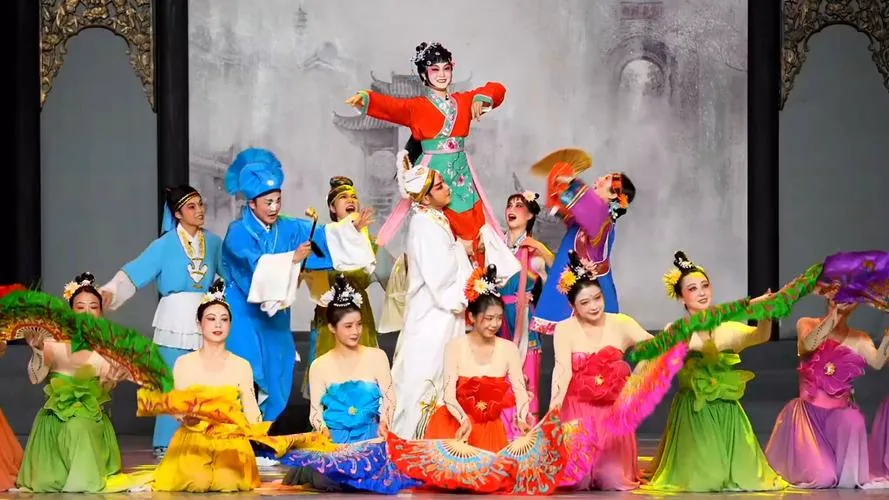
Deep in the misty tea gardens of Shaoguan, where ancient tea trees have stood for centuries, a unique theatrical tradition has been flourishing for nearly 200 years. Northern Guangdong Tea‑Picking Opera, known locally as Cai Cha Xi, is one of Guangdong’s six major traditional operas and a national intangible cultural heritage. Rooted in the region’s deep‑rooted tea culture, this art form is now experiencing a remarkable revival — from the training of a new generation of young performers to innovative productions that are bringing the opera to urban stages across the province.
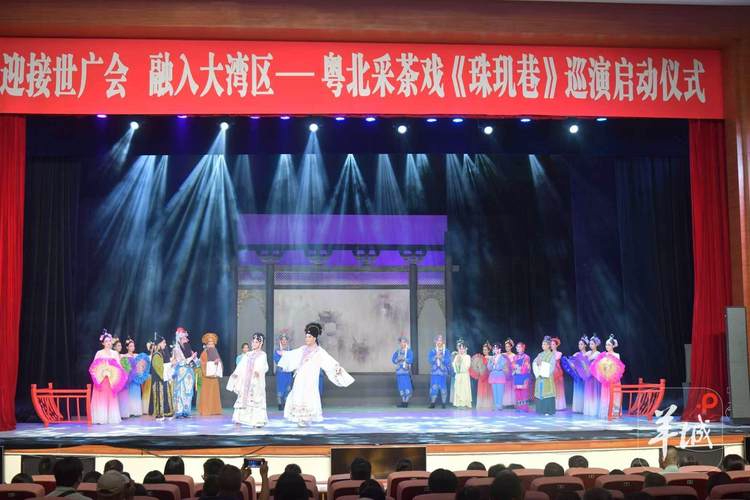
Why is this story worth reading today? Because while many traditional art forms struggle to survive in the modern era, Northern Guangdong Tea‑Picking Opera offers a compelling case study of how cultural heritage can adapt and thrive — attracting young audiences, embracing new media, and even performing at high‑speed rail stations.
Historical Roots: A Tea‑Born Art Form
As the saying goes, “a basket of tea leaves carries a basket of songs.” Northern Guangdong Tea‑Picking Opera emerged directly from the region’s rich tea culture. When the Hakka people migrated into northern Guangdong, they brought not only their tea‑planting, harvesting, and processing skills, but also the mountain songs and folk tunes they sang while working in the tea gardens. Over time, these simple tea‑picking songs evolved into short dramatic sketches, gradually giving shape to what is now known as Northern Guangdong Tea‑Picking Opera.
The opera originated from the tea‑picking folk songs and ditties that circulated in Fujian and Jiangxi before the Ming and Qing dynasties. As it developed, it absorbed folk lantern and drum dance forms from Jiangxi and southern Hunan, eventually becoming a distinctive local operatic genre. By the Jiajing period of the Ming Dynasty, tea‑picking performances were already popular in northern Guangdong’s prefectures, and by the Qianlong and Jiaqing eras of the Qing Dynasty, the art form had fully matured.
The opera spread into Guangdong via two main routes: the Meiguan Ancient Road at Nanxiong, and the “Three Southern Counties” in southern Jiangxi. Once there, it blended with local mountain songs to form the northern and eastern Guangdong tea‑picking traditions seen today.
Artistry in Motion: Steps, Fans, and Sleeves
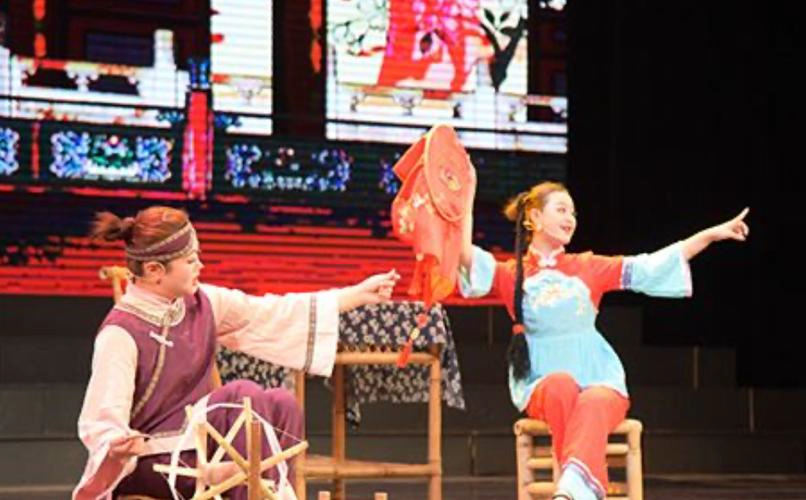
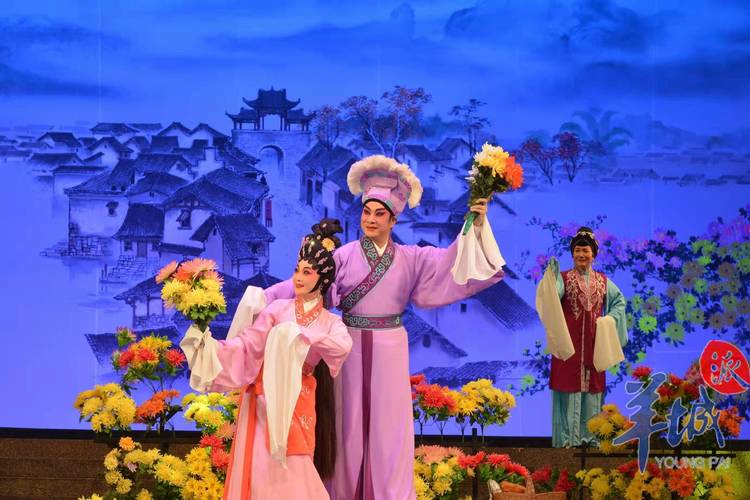
Northern Guangdong Tea‑Picking Opera is celebrated for its lively, upbeat style and deep local flavor. The performance tradition includes what practitioners call the “three unique elements”: steps, fans, and sleeves.
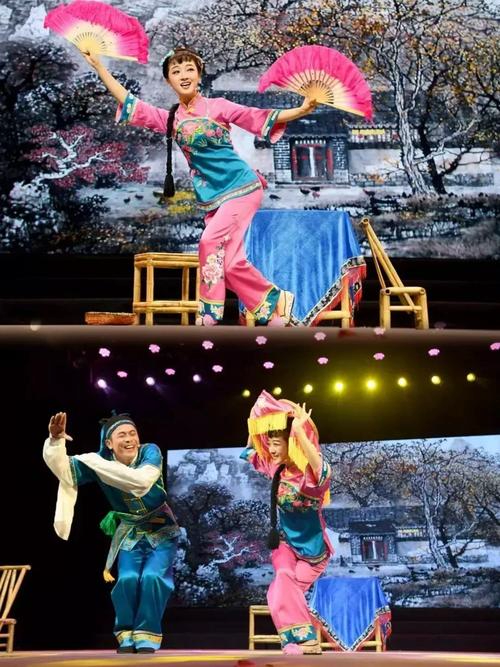
Every movement is inspired by daily life in the tea gardens. The “short step” mimics the posture of villagers working in the tea‑house sheds, while the sleeve movements originate from the towels tea farmers used to wipe away sweat. The art form originally featured just three role types — dan (female), sheng (male), and chou (clown) — which is why it was traditionally known as the “Three‑Role Troupe.”
The musical style is bright and spirited, with an orchestra of gongs, drums, and string and wind instruments. The vocal music blends local mountain song melodies, narrative folk singing, and ceremonial music, divided into three categories: tea‑picking tune, lantern tune, and minor tune. Depending on the string tuning, it further splits into northern and southern branches, while its structure shifted from linked tunes to more varied rhythmic patterns.
National Recognition and the Crisis of Continuity
In 2011, Northern Guangdong Tea‑Picking Opera was inscribed on the third batch of China’s National Intangible Cultural Heritage list, with the Shaoguan Northern Guangdong Tea‑Picking Opera Protection and Inheritance Center designated as the official safeguarding unit. Yet, despite this national recognition, the opera has faced a severe crisis of continuity. A decade ago, when the market for traditional opera shrank, the Shaoguan City Tea‑Picking Troupe was forced to disband, and its members were reassigned to local cultural centers and museums.
Loyal audiences helped sustain the art through its darkest days. One performer recalled performing in rural Wengyuan during the Spring Festival: “Two elderly audience members were shivering from the cold, yet they were completely absorbed in the performance, laughing with joy.” That devotion prompted a turning point: “If the audience loves tea‑picking opera this much, how can we give up?”
A New Generation Steps Onto the Stage
In 2016, the Shaoguan Northern Guangdong Tea‑Picking Opera Protection and Inheritance Center was formally established, bringing the scattered performers back together. But the greatest challenge was the shortage of young talent. Many of the elder performers were aging, and the middle‑generation actors averaged 43 years old. As the center’s director observed, “Stage art depends on people — both performers and audiences. If there are no performers on stage, what will the audience watch?”
In 2020–2021, with support from the Shaoguan Municipal Publicity Department, a publicly funded training program was launched, producing 60 college‑level opera specialists in two cohorts. Under a “five‑year continuous” model, students spent their first four years learning fundamental skills at the Guangdong Vocational Academy of Art, and their final year training at the Heritage Center.
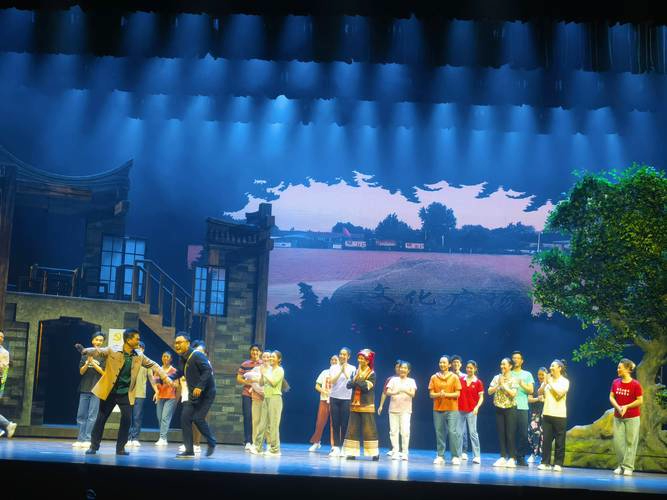
The program’s first graduating class of 29 students recently passed their internship assessments and are now taking the stage. Many of these “post‑2005” performers grew up hearing tea‑picking opera from their grandparents. One new graduate reflected: “Tea‑picking opera is very close to everyday life. The older generation used to date by going to see it together — they thought it was fashionable. I think that’s the new ‘guochao’ (national trend).”
Breaking New Ground: Modern Productions and New Audiences
The Heritage Center has also reinvigorated its repertoire. New productions like the tea‑picking opera Mailbox No. 51 and the tea‑picking musicals Another Spring and Spring Blossoms have brought fresh energy to the tradition. The 2025 tea‑picking musical Spring Blossoms was performed five times in Guangzhou, receiving enthusiastic responses from urban audiences.
The opera has also been integrated into Shaoguan’s tourism strategy, with performances staged at scenic spots including Danxia Mountain and Nanhua Temple, giving visitors a chance to experience this traditional art while exploring the region’s natural beauty. At Guangzhou South Railway Station, the national intangible cultural heritage tea‑picking opera captivated both domestic and international travelers, with foreign passengers praising the lively performance. Audience members were invited to learn classic tea‑picking movements such as “fan flower” and “floating water” — turning passive viewing into active cultural participation.
Beyond the stage, the opera has reached local schools through “Tea‑Picking Radio Gymnastics” and campus lectures, helping young students connect with their cultural heritage in ways that feel relevant and engaging.
Key Figures Preserving the Legacy
Zhang Chengqing, a provincial‑level inheritor of the opera, moved from Ganzhou, Jiangxi, to Shaoguan 48 years ago. Even in his seventies, he remains passionately engaged in teaching younger performers — “dancing whenever he hears the tea‑picking tune.” Wu Yancheng, a national‑level inheritor, continues to mentor new performers in Nanxiong and Qujiang, hoping to see the opera bloom once more. And young performers like Wu Ye are bringing the opera back to campus, where they’ve gained fans among classmates who ask for autographs — a small but meaningful sign of changing perceptions.
The Road Ahead: From Heritage to Living Tradition
With over 300 original and adapted works in its repertoire, including beloved classics such as Mending Leather Shoes, Dressing Up, and A San Teases the Old Master, Northern Guangdong Tea‑Picking Opera is no longer just a museum piece. It is a living, evolving art form carried forward by young performers in their teens and twenties, who are not only mastering traditional techniques but also experimenting with modern choreography and popular music — even adapting comedic sketches by Guo Degang to attract their peers.
As one “post‑2005” performer put it, “If young people are given the chance to see tea‑picking opera, I believe some of them will want to understand it, and some of them will fall in love with it.”
Explore more
- Discover Shaoguan’s tea heritage
- Explore the origins of Shaoguan tea
- Browse our current tea selection
References & further reading
- [1] Baidu Baike. “Northern Guangdong Tea‑Picking Opera.” Baidu Baike, 2026.
Sources & References
- NewsGD — “Tea-Picking Opera Performance at Guangzhou South Railway Station”
- Foshan Plus — “New Generation of Tea-Picking Opera Performers” (2025)
- Nanfang Plus — “Revival of Northern Guangdong Tea-Picking Opera”
- Baidu Baike — “Northern Guangdong Tea-Picking Opera”
- Qujiang Government — Heritage documentation archives