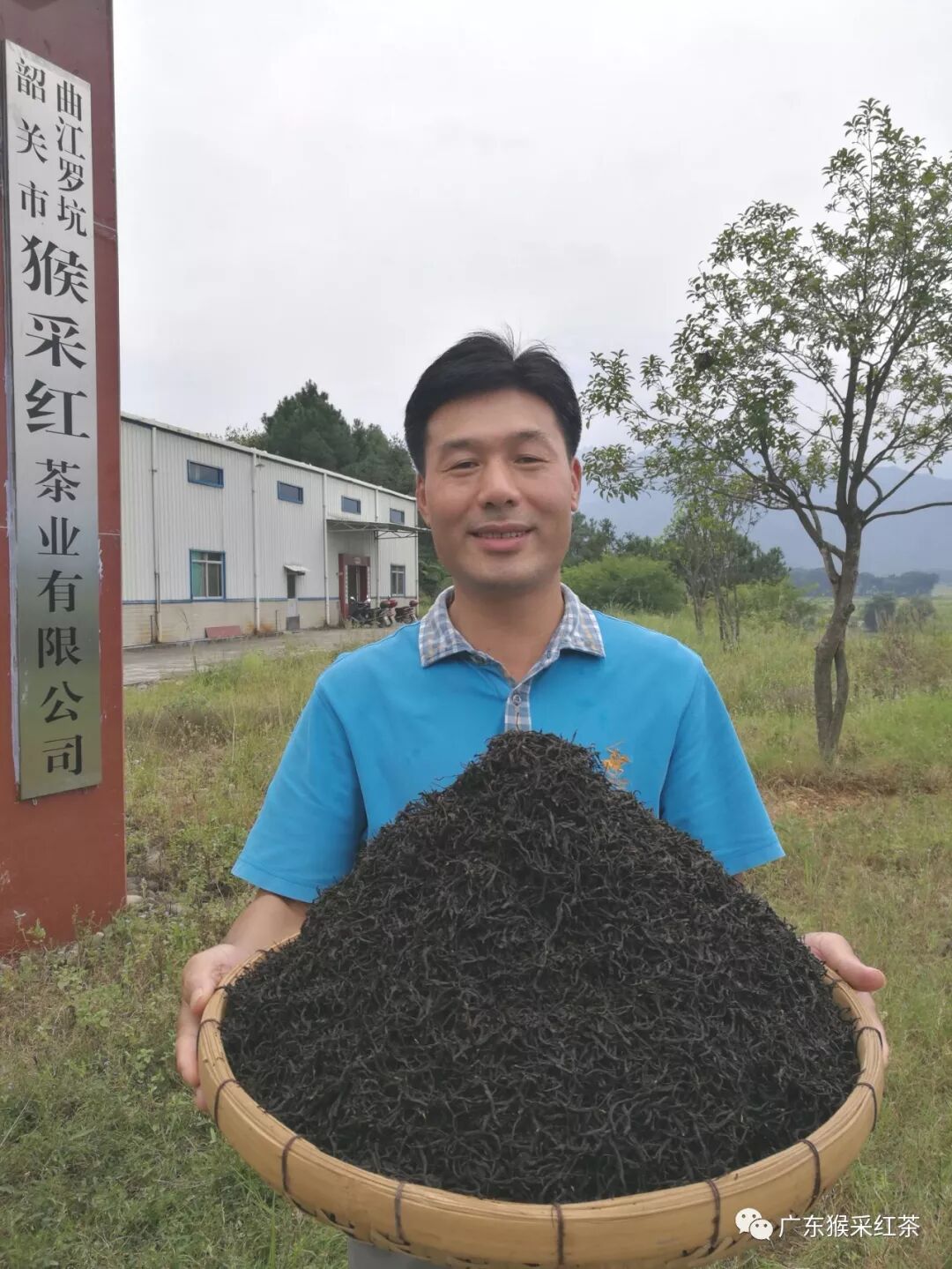
On the eighth day of June 2019 — China’s Cultural and Natural Heritage Day — a man named Wang Ronghe stood in a sunlit courtyard in Luokeng, Shaoguan, stirring fresh tea leaves in an iron wok over an open flame. The smoke curled upward through the mountain air. Behind him, woven bamboo trays held leaves picked the same morning from trees his ancestors had harvested for generations. He was not making tea for tourists. He was demonstrating a craft that had been officially recognized as intangible cultural heritage — and he was its inheritor.
The locals call him “Monkey Brother” (猴哥). His company is Monkey-Picked Red (猴采红). And the tea he was making that day is the HCH-01 Peach-Almond Aroma Ancient Tree Black Tea — a Legend-grade tea that carries every thread of this story in its leaves.
The Intangible Heritage Behind a Single Leaf
Wang Ronghe’s name is listed in the official register of Luokeng Black Tea Making Skills — an intangible cultural heritage of Guangdong. This is not a marketing title. It is a legal recognition by the government that the techniques he practices belong to China’s living cultural heritage. The 22-step process he follows — from the ritual cleansing of tea baskets and incense burning to honor the tea spirit, to the final aroma-enhancing roast — is the same sequence that has been passed down through generations of Luokeng’s tea masters.
The historical record backs him up. The Qing Dynasty Shaozhou Prefecture Gazetteer (光绪版《韶州府志》) and Qujiang County Gazetteer (《曲江县志》) from the Guangxu period document: “The tea of Luokeng is red in color and rich in flavor; it remains unchanged overnight and is particularly effective in relieving summer heat.” That description matches what Wang Ronghe’s HCH-01 produces today — a continuity of craft across more than a century of written record.
But his tea has earned modern recognition too. In 2015, it was named one of Guangdong’s Top Ten Famous Teas (广东十大名茶) — a province-wide honor that places it among the best teas southern China produces. It has also received the Guangdong Province Famous Brand Certificate, the 10th Guangdong Famous & Premium Tea Quality Competition Gold Award, and the 11th National “China Tea Cup” Premium Tea First Prize. These are not self-claimed accolades. They are awarded by independent judging panels in blind tastings.
The 22 Steps That Begin With a Ritual
What makes Wang Ronghe’s HCH-01 different from any other black tea is not just the ancient trees it comes from — it is the way he transforms their leaves. The 22-step process begins before the leaves are even picked. The tea maker must clean the baskets, bathe, change into fresh clothing, and burn incense to honor the tea spirit before starting. This is not superstition. It is a discipline that sets the mental state for what follows: a sequence where every step is timed to the minute and every temperature adjustment is made by hand and eye.
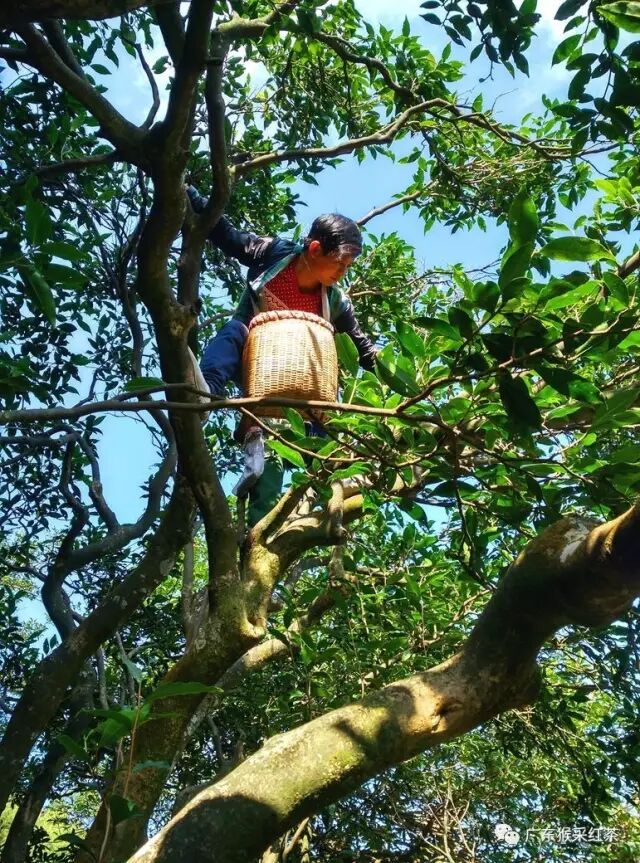
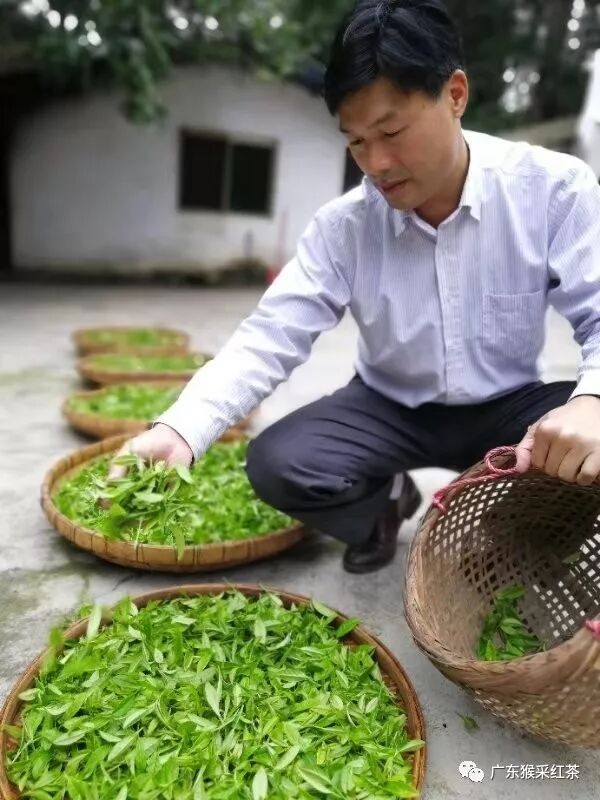
From leaf selection through sunning, withering, fixing, rolling, repeated rolling, shaping, pan-firing, baking, and the final fragrance-enhancing roast — 22 steps in total — three stages are critical: fixing (杀青), baking (烘焙), and fragrance development (提香). Each requires a different heat level. Each must be executed at the right moment relative to the leaf’s moisture content. A minute too long in the pan and the liquor darkens. A minute too short and it stays green.
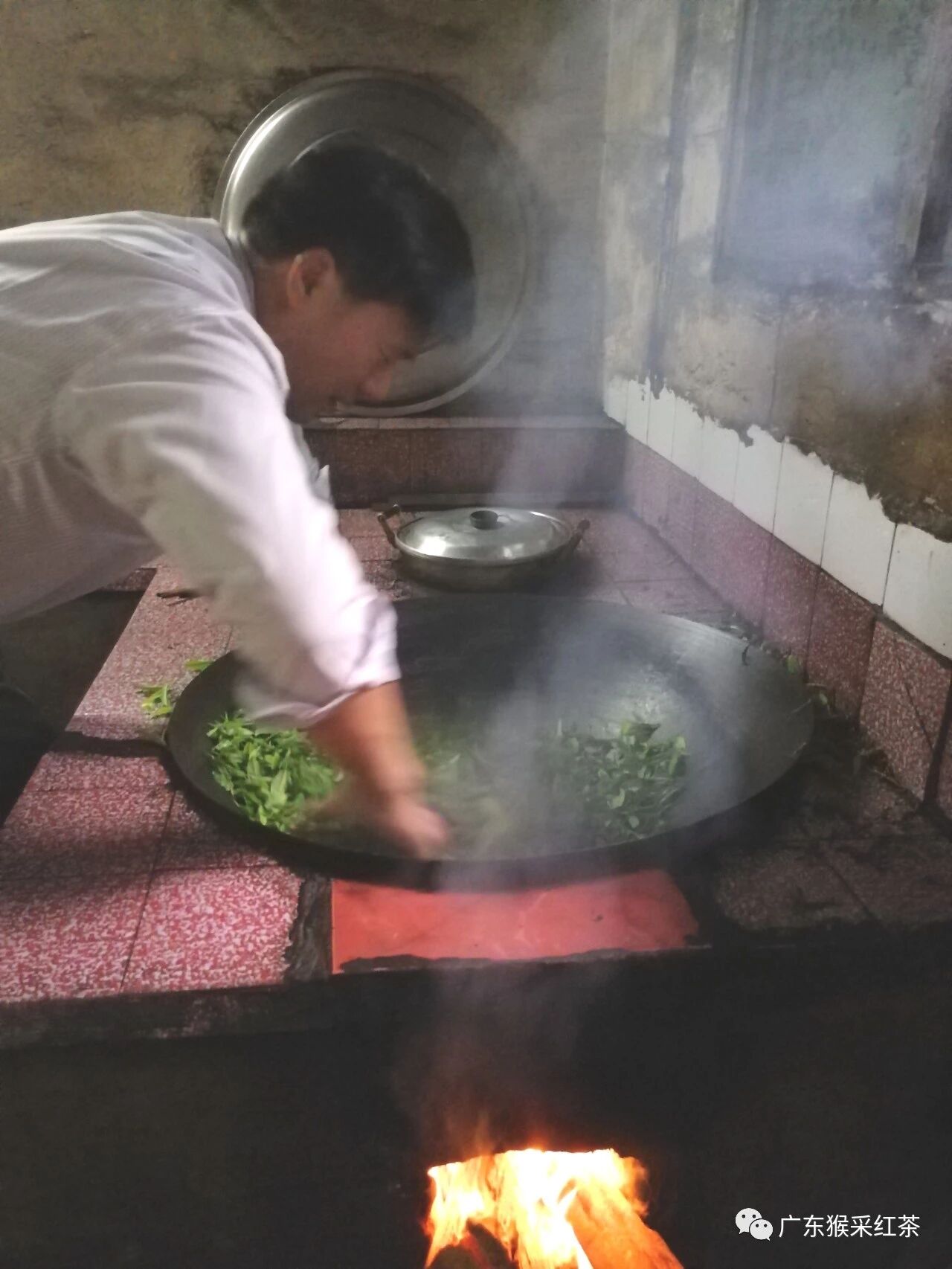
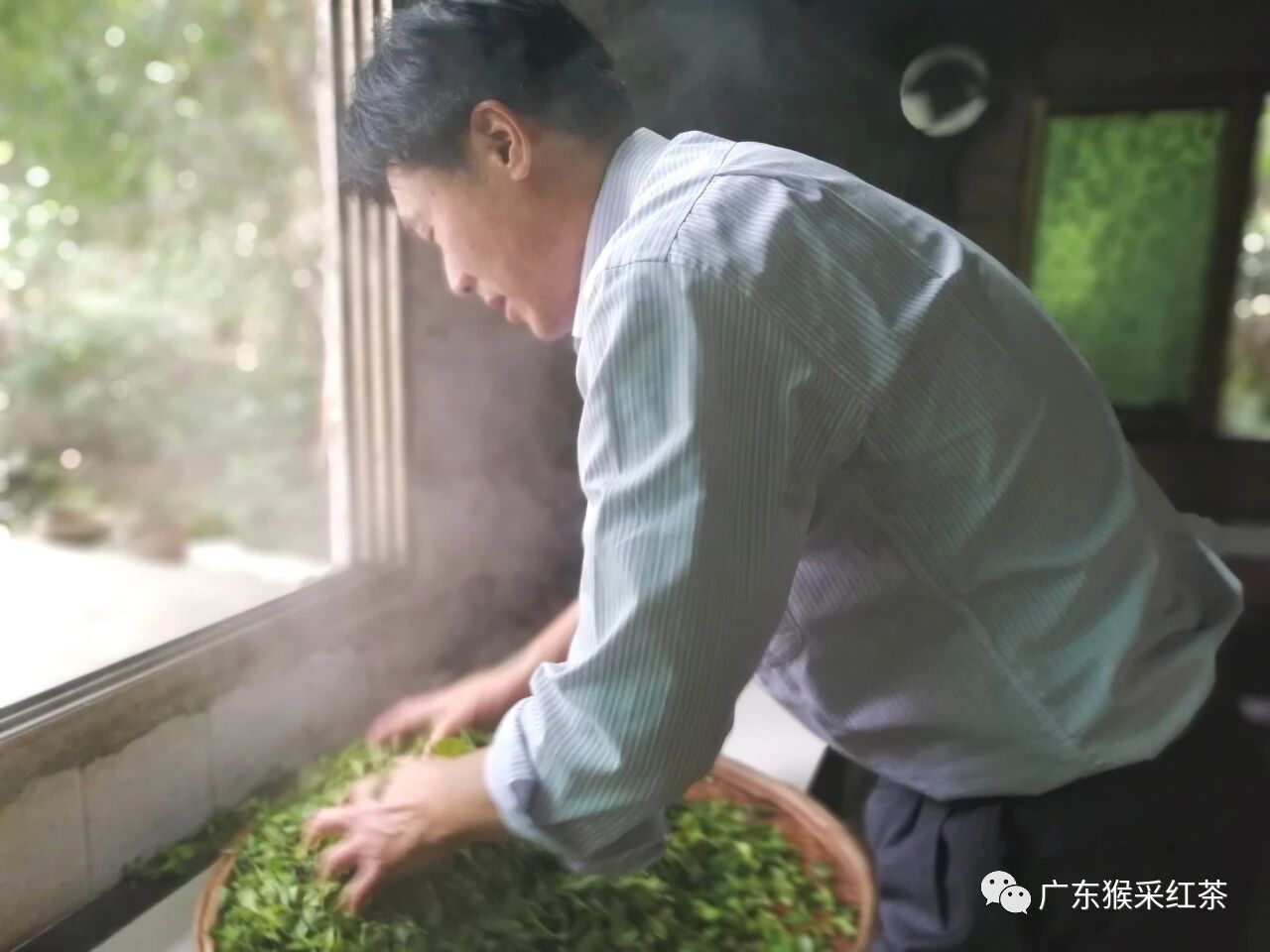
Wang Ronghe still does the pan-firing himself — by hand, in an iron wok over a wood fire. The photographs from his workshop show his hands working the leaves at temperatures that reach 200°C, turning them continuously to ensure even heat distribution. This is the same method that earned his tea its heritage designation. It cannot be automated. It cannot be delegated. It can only be learned through years of apprenticeship.
Eight Hundred to Twelve Hundred Meters: The Altitude That Makes the Difference
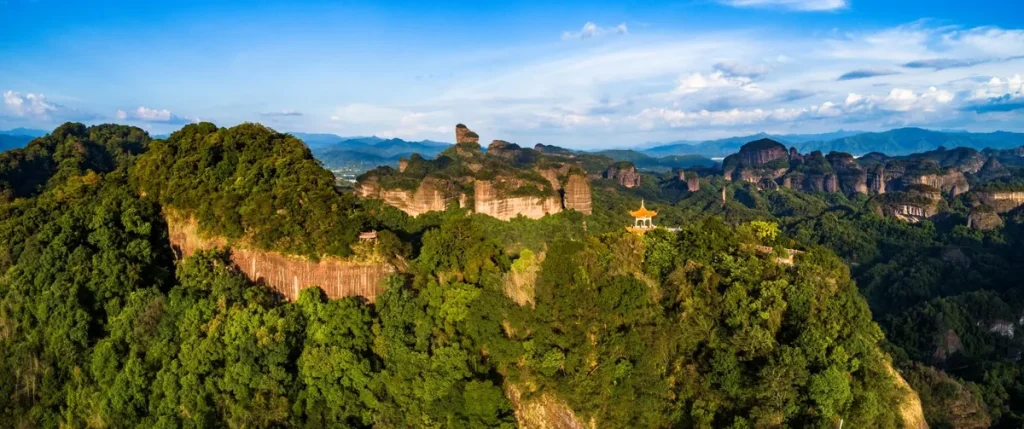
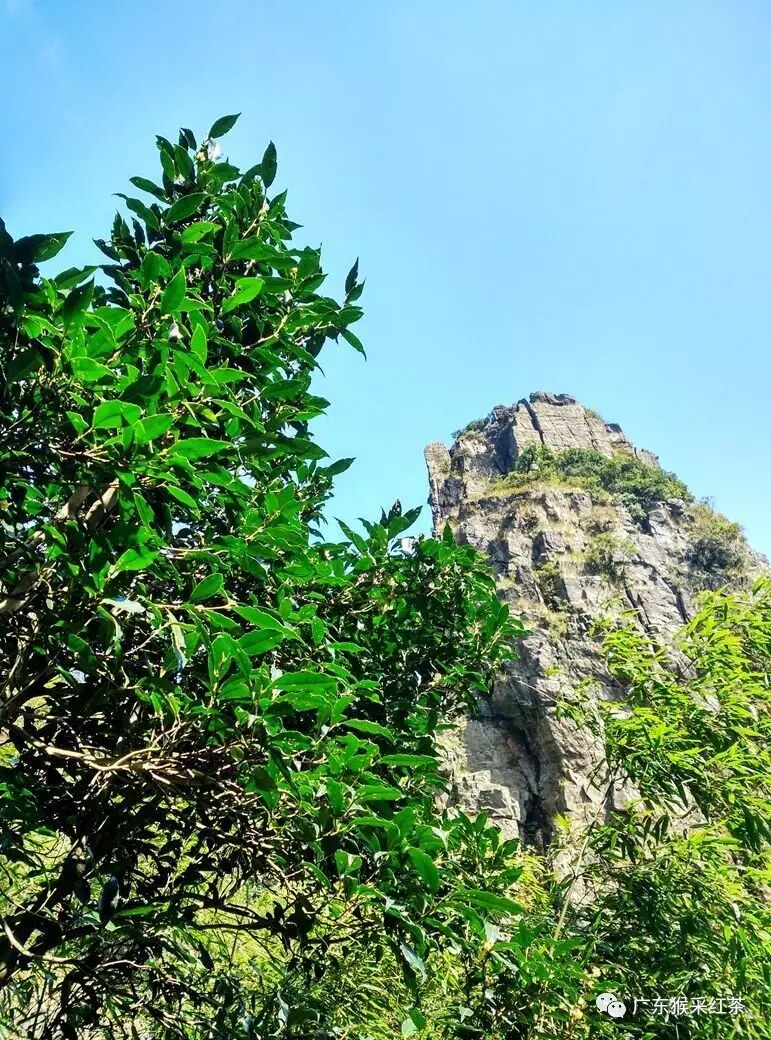
The HCH-01’s raw material comes from wild ancient tea trees growing at 800 to 1,200 meters in Luokeng’s mountain forest. Altitude is not incidental to the flavor — it is the primary factor that determines why this tea tastes the way it does.
At 1,000 meters, the average temperature drops approximately 5°C compared to low-elevation gardens. This slows the tea plant’s metabolism, extending the growth cycle and allowing amino acids to accumulate in the leaves. The result is a leaf with higher concentrations of theanine (the compound responsible for umami and smoothness), more soluble sugars (which contribute to the tea’s natural sweetness), and denser aromatic precursors — the raw material that Wang Ronghe’s 22-step process transforms into the signature peach-almond fragrance.
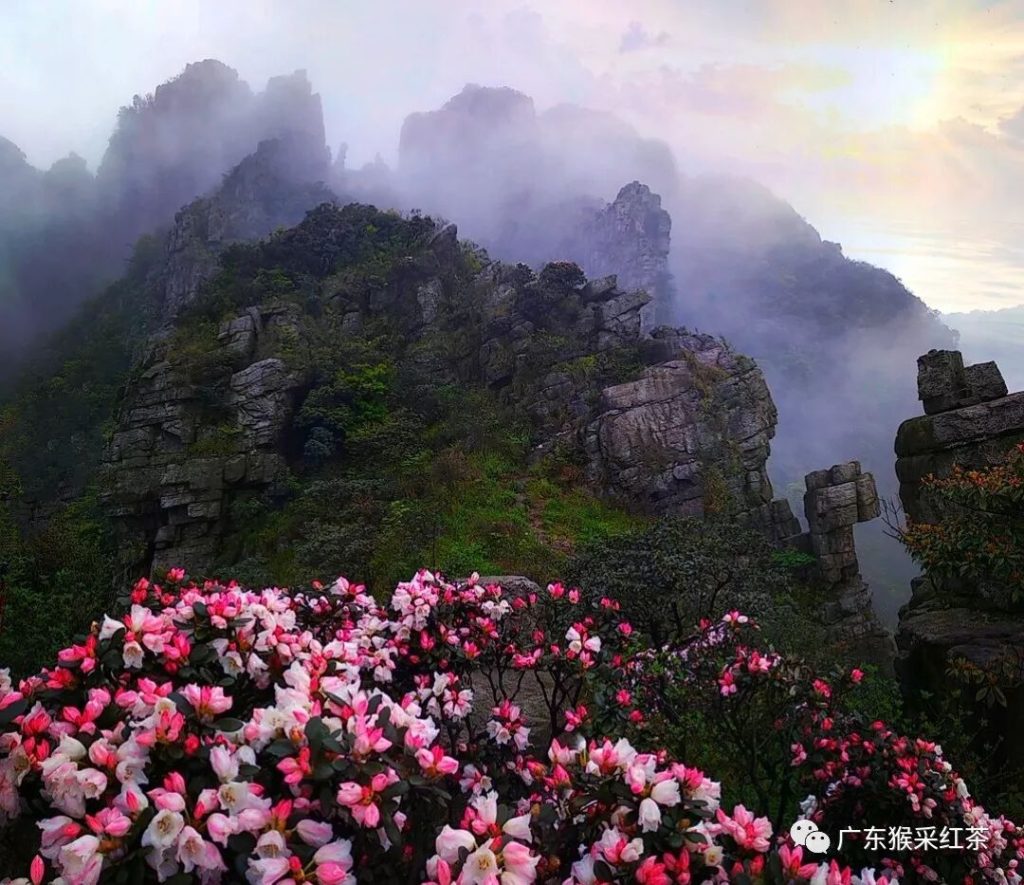
Scientific research on high-mountain tea confirms this: for every 100-meter increase in elevation, nighttime temperatures drop by roughly 0.5°C, and it is this diurnal temperature variation that drives the accumulation of flavor compounds. The mist that frequently blankets Luokeng’s peaks at 800+ meters also provides natural shade, diffusing sunlight and encouraging the development of aromatic glycosides — the precursors to the tea’s distinctive scent. This is not subjective. It is plant physiology written into every leaf.
The Peach-Almond Fragrance That Comes From Nature, Not the Lab
The HCH-01’s defining characteristic is its natural peach-almond aroma — a fragrance that emerges from the leaves during processing without any flavoring, additive, or blending. It is the result of a specific combination: a particular genetic variant among Luokeng’s ancient tea trees, grown at a precise altitude range, and processed through a proprietary technique that Wang Ronghe’s team has refined over years.
The dry leaves are dark, tightly twisted, and stout — the physical signature of well-processed wild ancient tree black tea. When brewed, the liquor reveals a bright orange-red hue, clear and luminous. The aroma is immediately recognizable: a sweet, honeyed scent with distinct stone-fruit notes — peach and almond intertwined — carried on a woody base that speaks of the old trees it came from.
On the palate, the tea delivers what experienced drinkers describe as “woody-sweet almond charm” (木甜杏韵): a full-bodied texture with almost no astringency, a sweetness that coats the mouth and lingers, and a finish that carries the peach-almond note through multiple infusions. This tea steeps well beyond eight infusions, with the flavor profile evolving from bright fruit-forward notes in the early steeps to deeper, woodier tones later — a sign of leaves with substantial structural integrity and high extract density.
What $548 Represents
The price of the HCH-01 Peach-Almond Aroma Ancient Tree Black Tea reflects a chain that begins with the altitude of the trees and ends with Wang Ronghe’s hands in the wok. It includes the intangible cultural heritage designation that certifies the craft. It includes the organic certification, the gold awards from blind tastings, and the Guangdong Top Ten Famous Teas recognition. It includes the fact that the leaves come from wild ancient trees — not plantation bushes — growing at an elevation that produces flavor chemistry no low-altitude tea can replicate.
But mostly, it reflects something that cannot be scaled: a specific person, with a specific inherited skill, working in a specific way that has been recognized as cultural heritage. There is only one Wang Ronghe. There is only one Monkey-Picked Red. And there is only one HCH-01.
You can explore the Monkey-Picked Red HCH-01 Peach-Almond Aroma Ancient Tree Black Tea at our collection page. Its companion from the same ancient forest — the Snow Flower Rock Wild Ancient Tree Black Tea (Almond Aroma) — offers a different expression of Luokeng’s wild tea heritage.