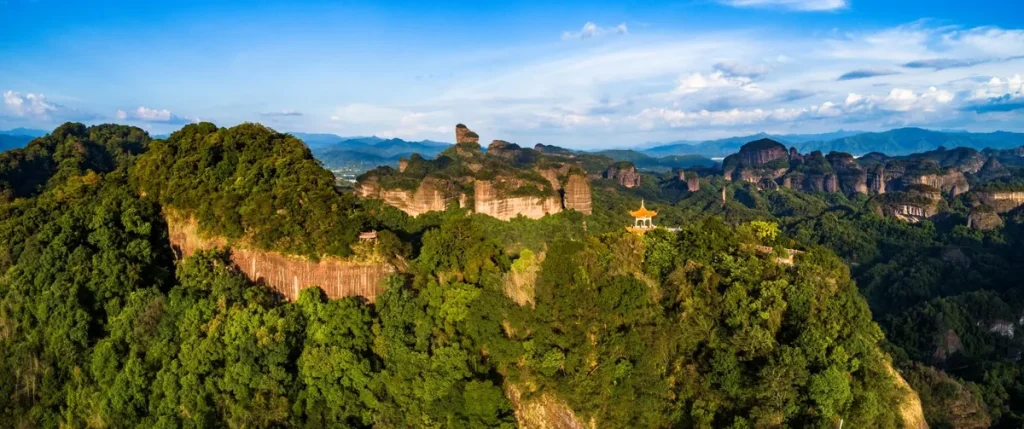
In 2014, a young man from the Yao community of Luokeng made a decision that would reshape his relationship with the mountains he grew up in. Wu Wenhua left his stable city job and returned to his home village in Qujiang District, Shaoguan — not because life in the city was hard, but because he knew something valuable was being overlooked in the forests he had known since childhood.
The Decision That Changed Everything
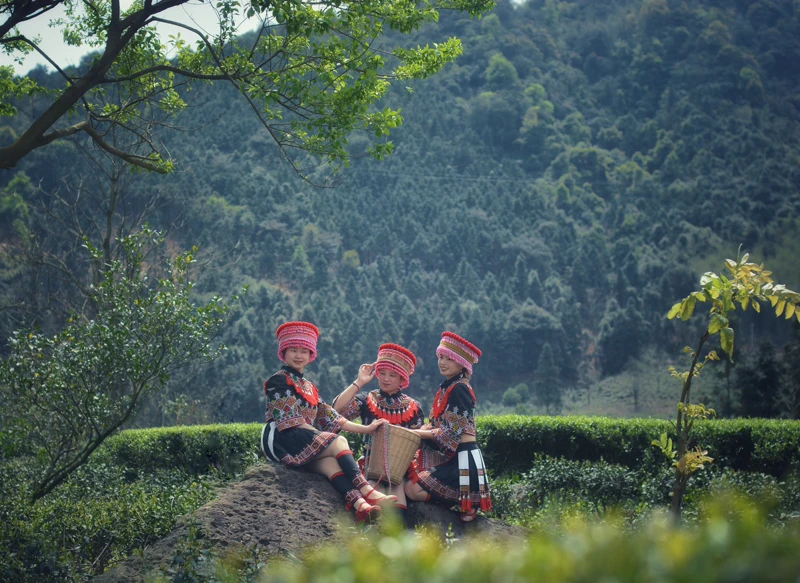
Wu Wenhua was born into the Yao community of Luokeng, a mountainous area deep within Qujiang District where mist hangs over terraced tea gardens for much of the year. After finishing his education, like many young people from rural Guangdong, he moved to the city — but the pull of the mountains never left him.
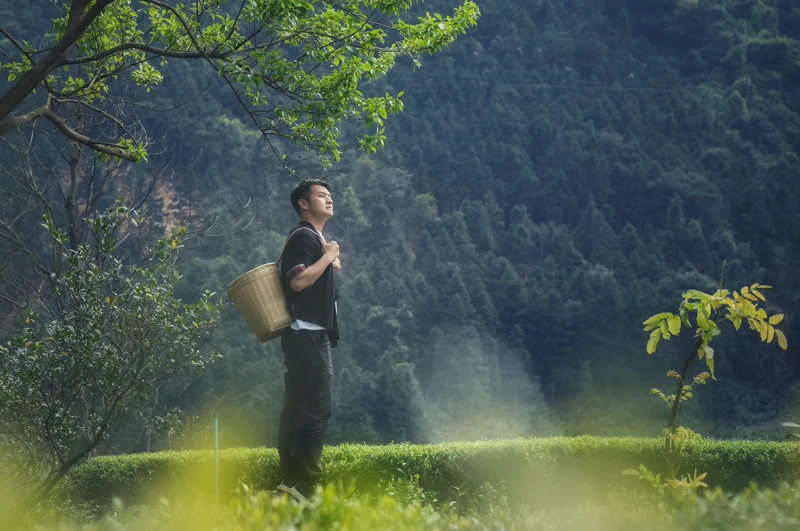
Luokeng is home to over 40,000 ancient tea trees, some more than 800 years old. These trees grow wild in the high-elevation forests of the Luokeng Nature Reserve, where the combination of mineral-rich soil, persistent fog, and cool mountain temperatures creates conditions that cannot be replicated anywhere else. Wu Wenhua saw what others had not yet recognized: that these ancient trees were not just a natural treasure — they were the foundation of something far larger than a small village enterprise.
Luokeng’s Ancient Legacy
What makes Luokeng’s tea trees exceptional is not just their age — it is how they grow. These are not plantation trees planted in neat rows. They are wild trees, scattered across steep mountainsides at altitudes between 500 and 1,200 meters, their roots anchored deep into the rocky terrain. The trees are medium-to-large leaf varietals known locally as “qingcha” (青茶), and they have adapted over centuries to Luokeng’s specific microclimate: high humidity, frequent mist, and the mineral-rich soils of the region’s granite-and-sandstone geology.
For generations, the Yao people of Luokeng have harvested these trees, passing down knowledge of when to pick and how to process the leaves. But much of that knowledge remained within the community, and the tea — despite its quality — rarely reached audiences beyond the region. Wu Wenhua saw an opportunity not just to build a business, but to create a bridge between Luokeng’s ancient traditions and the wider world.
From a Small Workshop to SC-Certified Factory
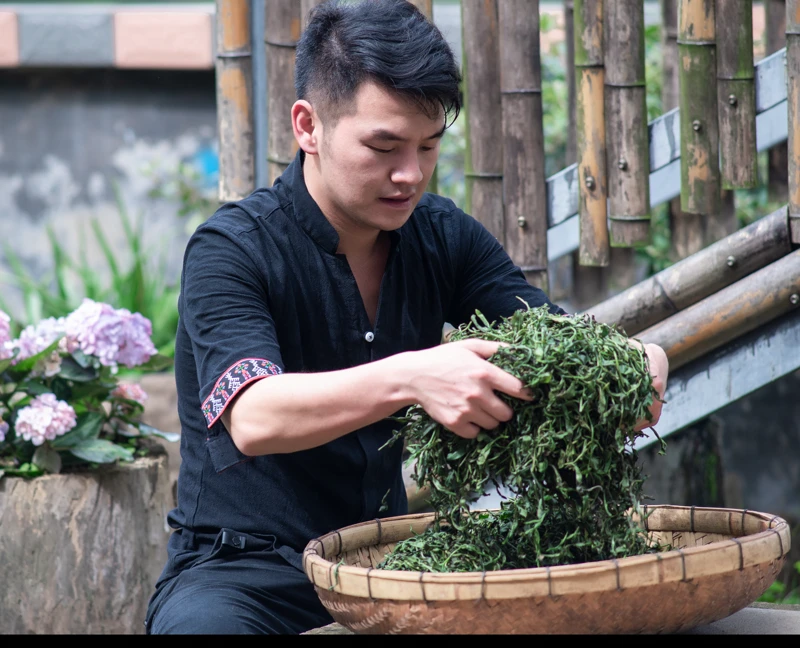
Returning home was only the first step. Wu Wenhua had grown up around tea, but turning that familiarity into a professional operation required skills he did not yet have. He traveled to Yunnan — China’s most renowned tea-producing province — and spent two years studying tea-making techniques under experienced practitioners. During this period, he earned two of the industry’s most respected credentials: Senior Tea Artisan (高级茶艺师) and Senior Tea Evaluator (高级评茶员).
Back in Luokeng, he established the Luokeng Ethnic Tea Factory (罗坑镇民族制茶厂), starting with modest equipment and a small workshop. The early years were difficult — the brand was unknown, the production was small, and finding buyers required persistent effort. With support from local government youth programs and technical guidance from the Guangdong Academy of Agricultural Sciences Tea Research Institute, he gradually built the operation into a standardized, SC-certified production facility.
Today, the factory follows rigorous quality protocols: strict “one bud, two leaves” picking standards, traditional withering and fixation methods, and careful temperature control during baking. Every batch is documented, and the facility meets national food-safety certification requirements — a standard that not all small-batch tea producers achieve.
Handcrafted, Season by Season
Wu Wenhua’s philosophy is straightforward: the tea should taste of where it comes from. He practices ecological cultivation — no chemical fertilizers or pesticides — and processes the leaves by hand, following the traditional sequence of withering (摊青), fixation (杀青), rolling (揉捻), and drying.
The spring harvest is the most important season. This is when the trees’ winter-dormant energy concentrates into the first tender shoots, producing leaves with higher amino acid content and a naturally sweet, complex flavor profile. The resulting black tea from Luokeng’s ancient trees has a characteristic honey sweetness, floral aroma, and a distinctive “rock rhyme” (岩韵) — a mineral quality that comes from the trees’ roots drawing nutrients through the mountain’s stone layers.
Each batch is small — the ancient trees do not produce large quantities, and Wu Wenhua chooses quality over volume. This is not a limitation but a choice: limited production means every leaf that leaves the factory has been handled with attention.
Yuntianshe — A Young Brand with Deep Roots
Wu Wenhua’s company, Yuanshanyuan (源山源), operates under the brand name Yuntianshe (云天社) — CloudSky. It represents the culmination of a decade of work: from a single workshop to a full-spectrum operation encompassing ecological tea gardens, certified production, and brand development.
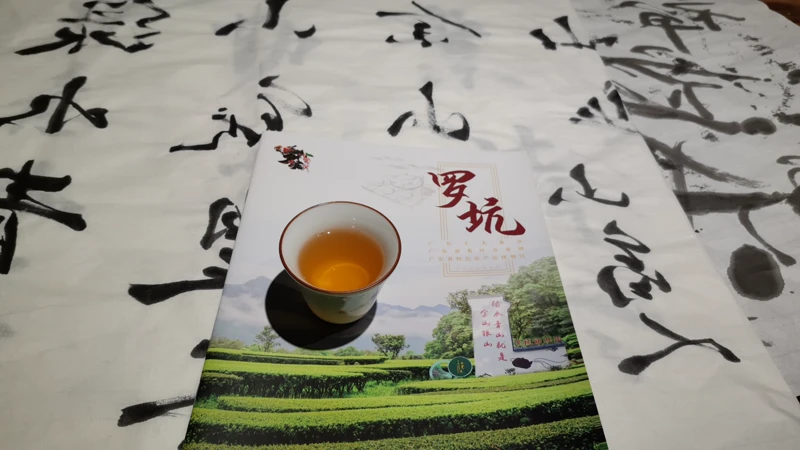
The first product to carry the Yuntianshe name on this platform is the CloudSky Impression Luokeng Tea — a spring-picked wild ancient tree black tea that captures the character of Luokeng’s high mountains. Made from ancient trees growing above 800 meters, it offers the honey sweetness, floral complexity, and mineral depth that define Luokeng’s best black teas.
Wu Wenhua’s story is not unusual in Shaoguan — many young people are returning to their hometowns, reviving traditional industries with modern standards. But his path reflects something specific about Luokeng: that the quality of its tea has always been there, waiting for someone who knew the mountains well enough to bring it out.
Explore the CloudSky Impression Luokeng Tea →
References
- Qujiang District Guan Gong Wei & Zhou Weirui — “Spring Tea in Luokeng: Young Entrepreneurs Return to Revitalize the Tea Industry,” March 2026. Feature article on Wu Wenhua, Luo Zeqin, and Zeng Fanhai.
- Yuanshanyuan Agricultural Tourism Development Co., Ltd. — Company profile and product documentation.
- Baidu Baike: Qujiang District — Geographic and demographic data.