The Almond Aroma That Stopped a Scientist — What Makes It So Rare?
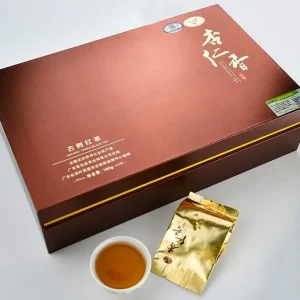
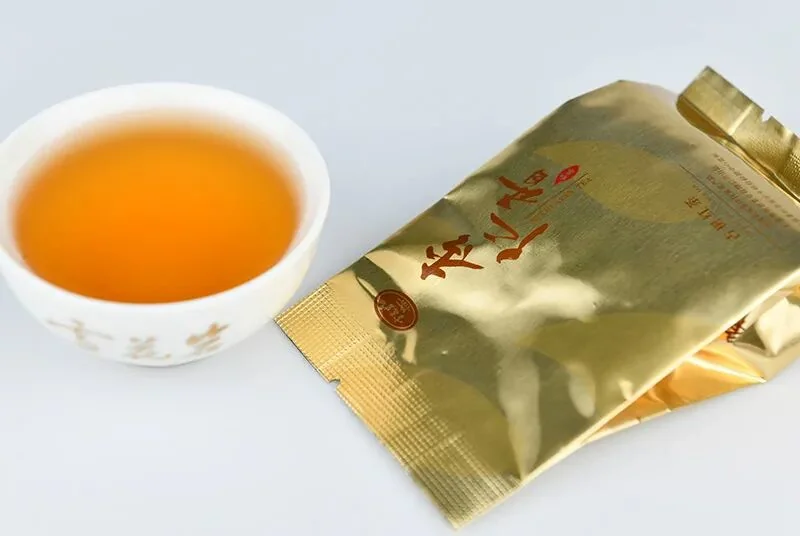
Open a pouch of Xuehuayan’s wild ancient tree black tea, and the first thing that hits you is not “tea” — it is a warm, sweet, unmistakable almond fragrance. Before you even brew it, your brain registers something familiar yet out of place: almonds? In a black tea?
Your first instinct, if you are an experienced tea drinker, is skepticism. Almond aroma in tea is almost always added — a flavored oil, a scent spray, a processing trick. You have been burned by “naturally flavored” teas before.
This is not one of them.
The almond aroma of Shaoguan’s wild ancient tree black tea is entirely natural — the product of a specific convergence of tree genetics, mountain ecology, and a precision processing technique that took three years to perfect. It is so rare that when a national-level tea scientist first identified it during a 48-hour nonstop processing session in the spring of 2010, he could not sleep for three days.
This is the story of that aroma — where it comes from, why it is so rare, and how you can recognize it when you taste it.
What Is Almond Aroma in Tea?
In the spectrum of tea aromatics, almond aroma sits at the intersection of nutty and fruity — close to the toasted notes of roasted oolongs but distinct in its clean, sweet character.
Two types exist in Shaoguan’s wild teas:
- Sweet Almond Aroma (甜杏仁香) — a round, smooth, marzipan-like fragrance that lingers in the aftertaste. This is the more common expression, found across several ancient tree communities in Luokeng.
- Flat Peach Almond Aroma (蟠桃杏仁香) — the rarer sibling. It carries a faint stone-fruit acidity on the front, like biting into a ripe flat peach, before resolving into the almond finish. This requires higher elevation (>1,000 m), older trees (>300 years), and specific microclimate conditions.
The key distinction: natural vs. flavored. Natural almond aroma in black tea is subtle and layered — it shifts as the tea cools, revealing floral and honey notes beneath the almond top note. Flavored almond tea, by contrast, is one-dimensional and aggressive; it smells the same from the first whiff to the last sip.
The Science — What Creates the Almond Note?

In 2010, Dr. Chen Dong — then a national tea industry technology system scientist and former deputy director of the Guangdong Academy of Agricultural Sciences — led a systematic survey of ancient tea tree communities in the Luokeng section of the Crocodile Lizard National Nature Reserve. His team collected nearly 40 leaf samples from different mountains and tree communities, processed each batch separately, and recorded every variable.
What they found was extraordinary. Through molecular biology analysis — comparing the genetic profiles of over a dozen tea communities against control samples from Yunnan, Fujian, and India — Chen Dong’s team discovered that the almond aroma is driven by a single compound: benzaldehyde.
The numbers tell the story:
- ~40% of total aroma compounds in Xuehuayan’s almond aroma tea is benzaldehyde
- <5% is the benzaldehyde content in ordinary black teas (Dianhong, Yinghong, Qimen, Darjeeling — all measured under 5%)
But benzaldehyde alone is not the answer. The almond aroma results from three factors that must converge simultaneously:
- Genetics — of the 10+ ancient tree communities in Luokeng, only three have the genetic capacity to produce benzaldehyde at concentrations high enough to survive the black tea fermentation process. The others never develop almond notes, regardless of how they are processed.
- Ecology — those three communities grow at 800–1,200 meters elevation on Danxia red sandstone soil, receiving over 100 foggy days per year. The combination of high UV exposure (which forces the tree to produce more aromatic precursors) and mineral-rich, well-drained soil (pH 4.4–6.5) creates the chemical foundation for benzaldehyde accumulation.
- Craftsmanship — this is the factor most tea descriptions overlook. The benzaldehyde precursors exist in the fresh leaf, but they are destroyed by incorrect processing. Chen Dong’s team spent 2010–2013 developing the precise withering duration, fermentation temperature, and baking profile that lock in the almond aroma. Get any parameter wrong, and the aroma either fails to develop or burns off entirely.
Chen Dong described the two-day discovery process: “During the fermentation phase on the second night, some samples began emitting a rich, sweet almond milk fragrance. We immediately added extra fermentation and baking treatments to find the optimal parameters for preserving it. By the third morning — after 48 hours without sleep — the sensory evaluation confirmed ‘almond aroma’ appearing consistently from three specific mountain communities. Everyone in the room was shouting with excitement. I could not sleep for three days afterwards.”
The Craft — How Almond Aroma Is Captured and Preserved

Once the fresh leaves arrive at the factory — often late at night, after a full day of dangerous mountain picking — the real work begins. Xuehuayan’s tea masters, led by Li Yuming (recognized as one of Shaoguan’s Top 10 Craftsmen), follow a process that balances tradition with the precise parameters established by Chen Dong’s research.
The critical stages where almond aroma is made or lost:
- Withering (萎凋) — the fresh leaves are spread thinly and monitored continuously. During this phase, the enzyme activity begins converting precursor compounds. Experienced tea masters know that the withering time and humidity must be adjusted based on the specific mountain origin of the leaves that day.
- Fermentation (发酵) — this is where the magic happens. At precisely the right moment, the leaves begin emitting the almond milk fragrance that Chen Dong first identified in 2010. The temperature and oxygen levels must be controlled to ±1°C; even a small deviation shifts the aroma toward honey or floral notes instead of almond.
- Initial Baking (初烘) — the first application of heat arrests fermentation and locks in the developed aromatics. The benzaldehyde concentration peaks during this stage. Under-bake, and the tea will be grassy and unstable; over-bake, and the almond note turns to toast.
- Aroma Enhancement (提香) — the final, precision-controlled heating that stabilizes the flavor profile. The heat is applied in stages, with the tea master tasting every few minutes to catch the exact moment when the almond aroma reaches its peak expression.
This is not a process that can be automated. Machine-made black tea — the kind found in most tea bags and supermarket tins — uses standardized temperature profiles that destroy the delicate benzaldehyde precursors before they can develop. Only hand-crafted, lot-specific production preserves the full aromatic potential.
Why Is Almond Aroma So Rare?

The rarity of natural almond aroma in black tea comes down to a simple fact: black tea fermentation destroys most aromatic compounds. Unlike green tea (which is heat-fixed early to preserve leaf aromatics) or oolong tea (which undergoes partial fermentation), black tea goes through full oxidation. This process is brutal on delicate aroma molecules.
Only leaves with an unusually high starting concentration of aromatic precursors — grown on old trees taller than a house, at elevations above 800 meters, in specific mineral soil — can survive full fermentation and still retain a perceptible almond note.
Even within Luokeng’s 40,000 ancient trees, the almond aroma appears only from three specific communities. The rest produce woody-sweet notes, honey, or floral aromas — excellent in their own right, but not almond. Chen Dong’s team documented this precisely:
- 3 communities → almond aroma (the rarest)
- 4 communities → woody-sweet aroma
- 1 community → “bitter-first, sweet-later” type (traditional Jianggong tea)
- Remaining → mixed floral and honey profiles
As Chen Dong puts it: “It is not that Xuehuayan limits production. Nature limits it.”
This is reinforced by the picking process itself. The wild ancient trees grow on cliff faces and rocky slopes in the nature reserve. Only the Yao ethnic villagers — who have lived in these mountains for generations — have the stamina and tree-climbing skill to harvest them. Even an experienced picker gathers only about 10 jin (5 kg) of fresh leaves per day. Each year, the almond aroma teas sell out within weeks of release.
How to Taste the Almond Aroma
To experience the almond aroma at its best, use this approach:
- Dry leaf aroma — before brewing, warm the leaves in a pre-heated gaiwan or cup. Inhale deeply. The almond note should be present but subtle — sweet, clean, like crushed almonds with a hint of dried fruit. If it smells overpowering or artificial, it is not natural.
- First infusion — brew at 85–90°C (185–194°F) for 2–3 minutes using 3–4 grams of leaf. The first infusion is the most aromatic. Smell the wet leaves and the liquor together. The almond aroma should be accompanied by honey sweetness and a faint floral undertone.
- Lingering finish — after swallowing, pay attention to the aftertaste. Natural almond aroma leaves a clean, sweet finish that stays on the palate for 30–60 seconds. Flat peach almond adds a subtle fruit acidity on the front that fades into the almond.
- Cooling test — as the tea cools to room temperature, the aroma will evolve. Natural almond tea becomes sweeter and more honey-like as it cools. Flavored tea smells the same hot or cold — a telltale sign.
The Verdict — Natural, Rare, Traceable
The almond aroma in Xuehuayan’s wild ancient tree tea is not a flavoring, not an accident, and not reproducible anywhere else on earth. It is the result of:
- ✅ National scientist-led R&D — Dr. Chen Dong’s team spent 2010–2013 identifying and optimizing the almond aroma process. Molecular analysis confirmed benzaldehyde at ~40% of total aroma compounds.
- ✅ 11 years of organic certification — Xuehuayan has passed annual organic audits since 2014. The fertilizer is sheep manure and peanut meal. No synthetic chemicals. No added flavoring.
- ✅ Three-label traceability — every package carries an organic anti-counterfeit label, a full agricultural traceability tag (with inspection reports), and a unique QR code for product verification. You can trace the leaves back to the specific community they were harvested from.
- ✅ Yao community heritage — the picking is done by ethnic Yao villagers who have climbed these cliffs for generations. The labor alone limits annual production to a few hundred kilograms.
“Xuehuayan healthy tea — organic, no rinse needed.” That is the company’s motto. The first infusion is always the best, so there is no reason to pour it away.
If you have never tasted a truly natural almond aroma black tea, you owe yourself the experience. Try the Snow Flower Rock Wild Ancient Tree Black Tea (Almond Aroma) →
Sources & References
- Chen Dong — Benzaldehyde concentration study: Snow Flower Rock ancient tree tea (40%+ higher than other regional teas)
- Shaoguan Tea Research Center — Volatile compound analysis data
- Xuehuayan Tea Cooperative — Production and processing records