What Makes Shaoguan Tea Unique?
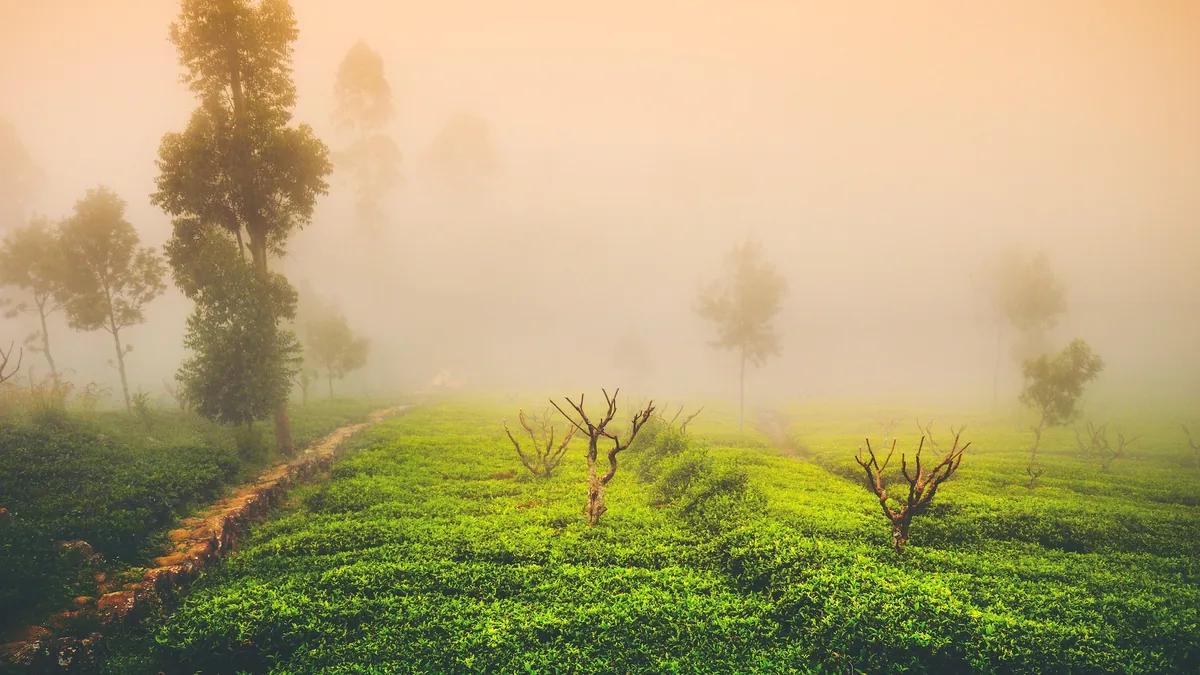
China produces more tea than any country on earth — over 3 million tons annually, from thousands of varieties across dozens of regions. In a landscape this crowded, a new tea origin needs something genuinely different to earn a place at the table.
Shaoguan has not one, but four such differences. They are not marketing claims. They are verifiable facts — measured, documented, and independently confirmed. Here is what makes Shaoguan tea unlike any other Chinese tea you have tried.
Ancient Trees That Have Never Known a Plantation
Most tea in the world comes from plantation bushes — shrubs pruned to waist height, planted in orderly rows, sprayed with pesticides, and fed chemical fertilizers. This is efficient farming. It produces consistent, affordable tea.
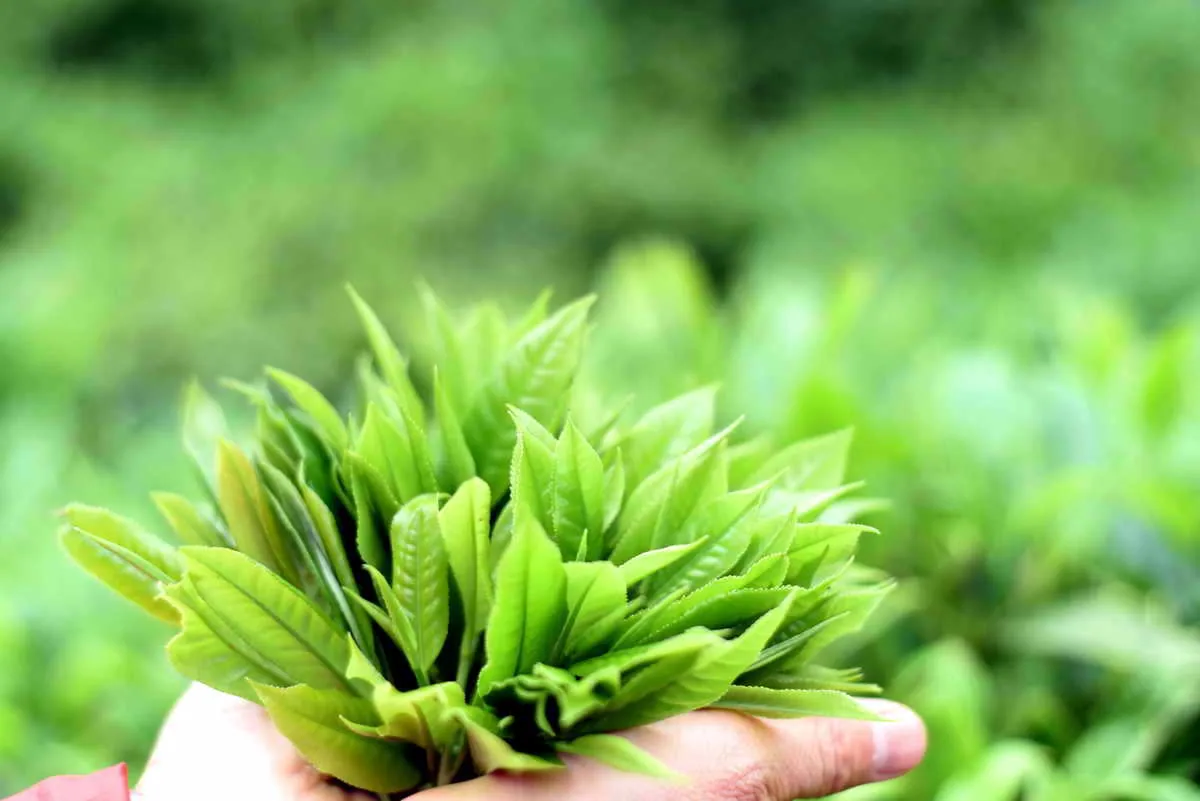
Shaoguan’s tea comes from something altogether different: wild ancient trees growing in the Luokeng section of the Crocodile Lizard National Nature Reserve. Over 40,000 wild ancient trees, some exceeding 800 years in age, grow untouched in protected forest at 600–1,200 meters elevation. No pesticides. No fertilizers. No irrigation. No pruning.
The difference in the cup is dramatic. Tea from old trees (树龄 >100 years) naturally contains higher amino acid levels and lower caffeine than plantation tea. The result is a liquor that is smoother, sweeter, and more complex — with none of the bitterness or astringency that defines mass-produced tea. A first-time drinker of Luokeng black tea often remarks that it “barely feels like tea” — meaning it lacks the harsh edges they have come to expect.
This is not a boutique novelty. It is a fundamentally different category of tea, made possible by geography and preserved by protection.
The Almond Aroma — A Flavor Found Nowhere Else
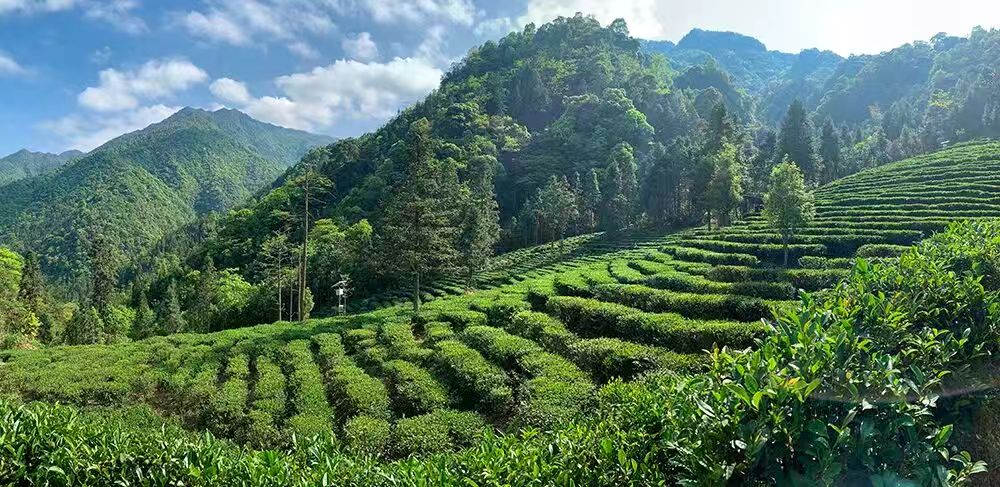
Among Shaoguan’s distinctions, one stands above all others: the natural almond aroma that characterizes the black teas of Luokeng. This fragrance — delicate, unmistakable, and entirely natural — is found nowhere else in Guangdong province.
The almond aroma is not added. It is not a flavoring. It is a product of three factors converging in a single place:
- Ancient tree genetics — the wild tea trees of Luokeng carry a genetic profile that produces aromatic compounds absent in cultivated varieties
- High-altitude mist — over 100 foggy days per year create slow growth conditions that concentrate flavor precursors in the leaf
- Mineral-rich soil — the weathered Danxia red sandstone imparts a mineral backbone that carries the almond note through the entire tasting experience
The result is a tea that announces itself before you drink it. Open the package, and the almond fragrance rises. Brew it, and the aroma fills the room. Taste it, and the flavor lingers — sweet, clean, with a finish that stays on the palate for minutes. First-time drinkers consistently identify the almond note before being told it is there.
This aroma is the signature of Luokeng black tea. It is the reason experienced tea drinkers — accustomed to the malty notes of Assam, the muscatel of Darjeeling, the smoky character of Lapsang Souchong — stop and pay attention when they encounter Shaoguan tea for the first time.
Experience it yourself: Snow Flower Rock Wild Ancient Tree Black Tea (Almond Aroma) is the purest expression of this unique character.
A Terroir That Cannot Be Replicated
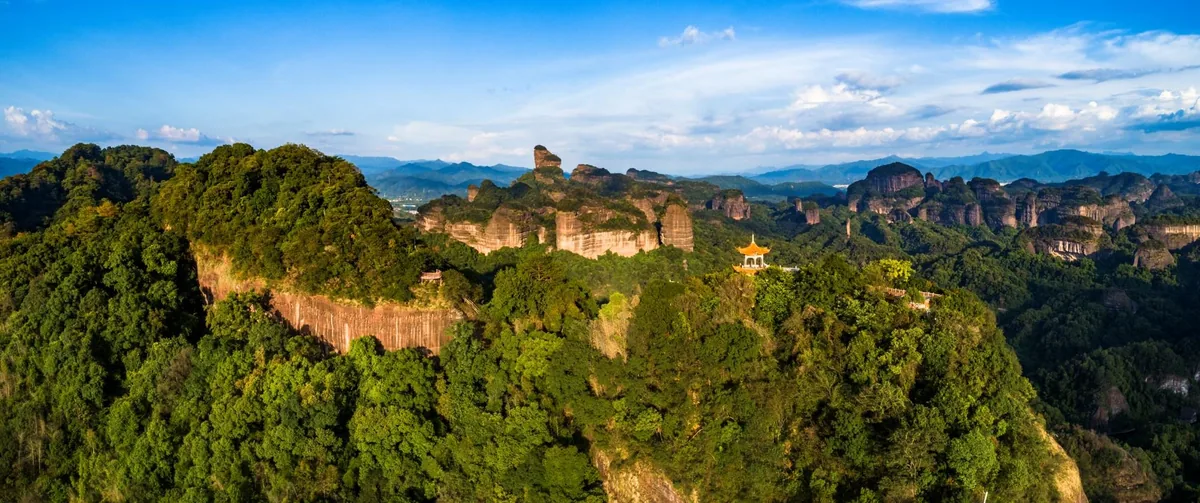
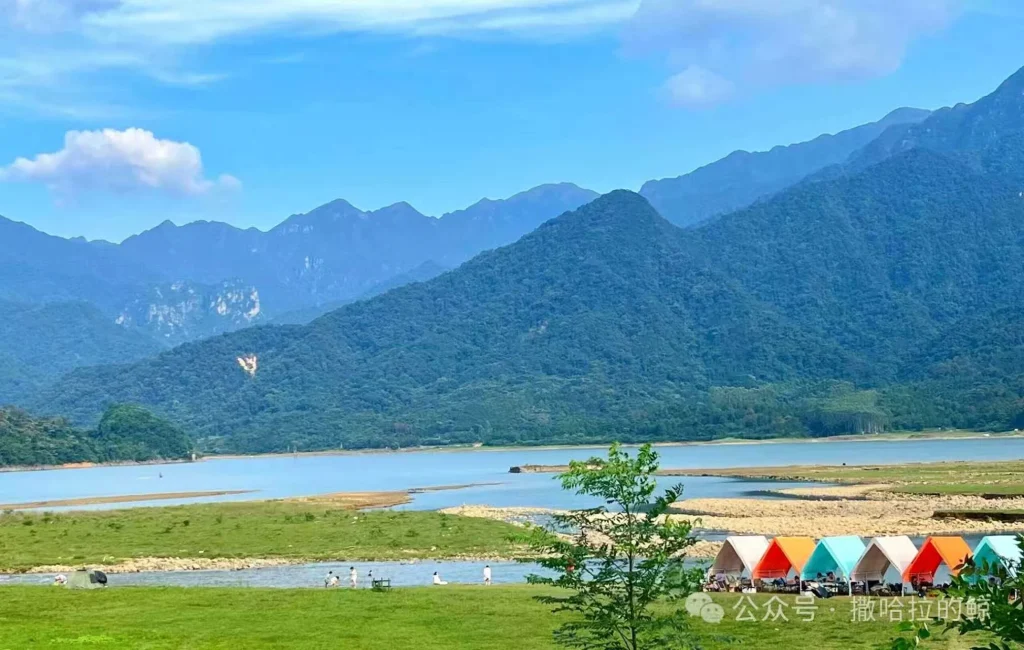
Great wine regions are defined by their soil. The same is true of tea. Shaoguan’s defining geological feature is the Danxia landform — a UNESCO World Heritage site of red sandstone pillars and deep gorges, formed during the Cretaceous period over 65 million years ago.
As the Danxia sandstone weathers, it produces soil with a specific and measurable profile:
- pH 4.4–6.5 — slightly acidic, ideal for tea (confirmed by National GI Protection specifications for Renhua Baimao)
- Well-drained, mineral-rich — the sandstone structure prevents waterlogging while releasing iron, aluminum, and trace elements
- Red-yellow earth — weathered from granite and sandstone parent rock, rich in the minerals that contribute to tea’s complexity
This terroir is fundamentally different from the volcanic soils of Fujian (which produce the mineral-driven rock oolongs of Wuyishan) and the alluvial plains of Yunnan (which yield the earthy, fermented pu’er of Xishuangbanna). Shaoguan tea sits between these two extremes — mineral complexity from the Danxia sandstone, sweetness from the high-altitude growing conditions, and a clean finish from the well-drained acidic soil.
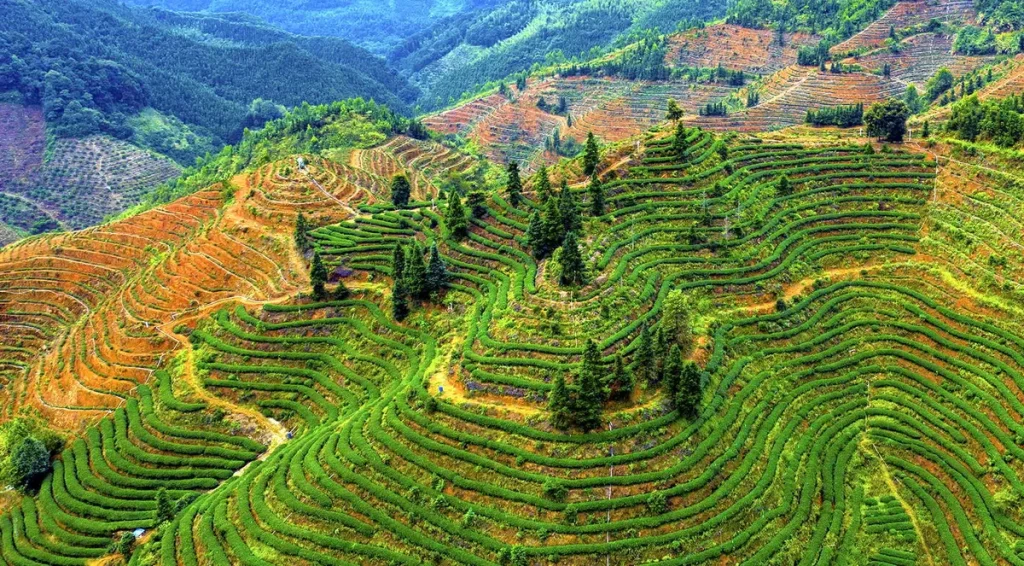
Altitude amplifies these effects. Shaoguan’s tea grows at elevations ranging from 250 to 1,600 meters, across the Luokeng, Renhua, and Lechang areas. The combination of high elevation, morning mist, and mineral-rich soil is rare — and irreproducible anywhere else.
Full Traceability — Not a Promise, a Documented Record
Many tea brands claim traceability. Few deliver it in a verifiable, publicly accessible format. Veritea — the quality assurance system behind Shaoguan Tea — is built to a different standard.
- GPS origin coordinates — each batch is traceable to the exact tea garden, not just the region or village
- Third-party lab reports — pesticide residue and heavy metal tests are publicly accessible for every batch
- Batch archive — harvest date, elevation, and processing logs are recorded and available
- 16-digit verification code — printed on every package, scannable to view the full batch dossier
- China Organic Certification (GB/T 19630) — independently audited, no synthetic pesticides or fertilizers
This is not marketing language. It is an operational commitment. Every batch we sell is logged, tested, GPS-tagged, and documented. Customers do not have to trust a brand name — they can verify the facts for themselves. Learn how Veritea works →
A Tea Tradition Documented Since 760 CE
Shaoguan tea is not a new discovery. Its history is recorded in one of the most authoritative sources in tea literature: Lu Yu’s Classic of Tea (茶经), the world’s first treatise on tea, written in 760 CE. Lu Yu recorded:
“Tea grows in Shaozhou (Shaoguan); its flavor is excellent.”
This single sentence — written over 1,260 years ago — places Shaoguan in an elite group of Chinese tea origins with documented Tang Dynasty heritage. Since then, Shaoguan’s tea tradition has been continuously recorded through imperial records, county annals, and now, GI protection certifications.
- Tang Dynasty (618–907) — Shaoguan tea recorded in Lu Yu’s Cha Jing
- Ming Dynasty (1368–1644) — Renhua white hair tea created; county annals document four tea types
- Qing Jiaqing era (1796–1820) — Renhua white hair becomes imperial tribute
- 2014 — Renhua Baimao receives National GI Protection
- 2020 — Lechang Baimao receives National GI Protection
- Today — Luokeng black tea techniques recognized as Shaoguan Intangible Cultural Heritage
This continuous written record — spanning 1,260 years from the Tang Dynasty to the present — is rare even among China’s most famous tea regions. It gives Shaoguan tea something that new, marketing-driven tea brands cannot fabricate: documented authenticity.
Taste the Difference
Four factors. Each one measurable, documented, and unique to Shaoguan. Together, they define a tea origin that deserves to be known — not because of marketing, but because the tea itself is exceptional.
If you have never tried Shaoguan tea, the best place to start is the almond-aroma black tea — Shaoguan’s most distinctive offering and the safest entry point for international palates. Snow Flower Rock Wild Ancient Tree Black Tea is the defining expression of this origin. For those who prefer a collector’s piece, Monkey-Picked Red Pan-Tao Almond Aroma offers a limited-release Legend-grade experience.
📖 Further reading:
- Shaoguan Tea: The Complete Guide — everything you need to know about this ancient tea origin
- Luokeng — the ancient tree sanctuary in the Crocodile Lizard Nature Reserve
- Lechang Terroir — how mountain mist shapes a unique black tea
Sources & References
- Chen Dong (Tea Scientist) — Almond aroma benzaldehyde research data
- Shaoguan Tea Research Center — Soil and climate analysis
- Qujiang Converged Media Center — Regional tea culture documentation