Shaoguan Tea: The Complete Guide
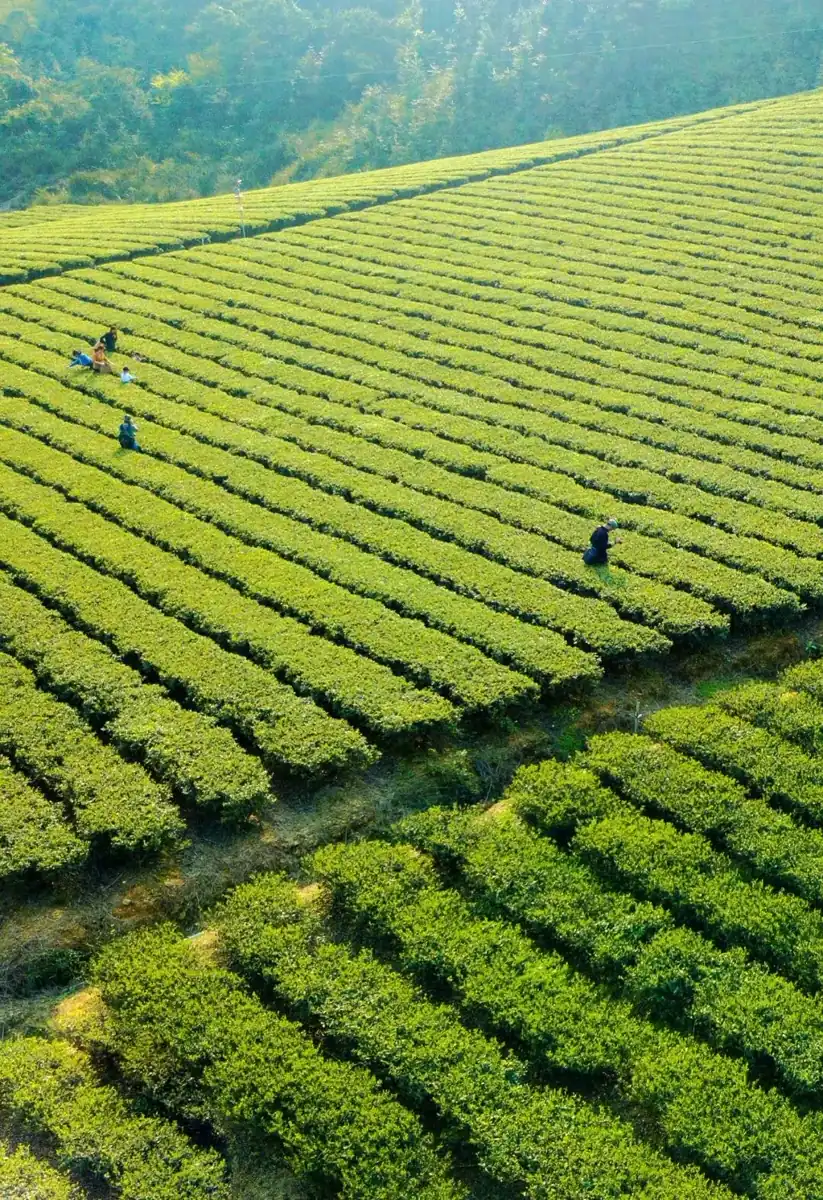
This is Shaoguan Tea: an ancient, terroir-driven tea tradition from the mountains of northern Guangdong, China. Protected by UNESCO Danxia landforms, tended by Yao ethnic communities, and documented in Lu Yu’s Classic of Tea since 760 CE — yet almost unknown outside China.
This guide covers everything you need to know: where it comes from, what makes it special, the six types produced, how it tastes, and how to brew it. By the end, you will understand why Shaoguan is one of China’s most overlooked premium tea origins — and why that is changing now.
What Is Shaoguan Tea?
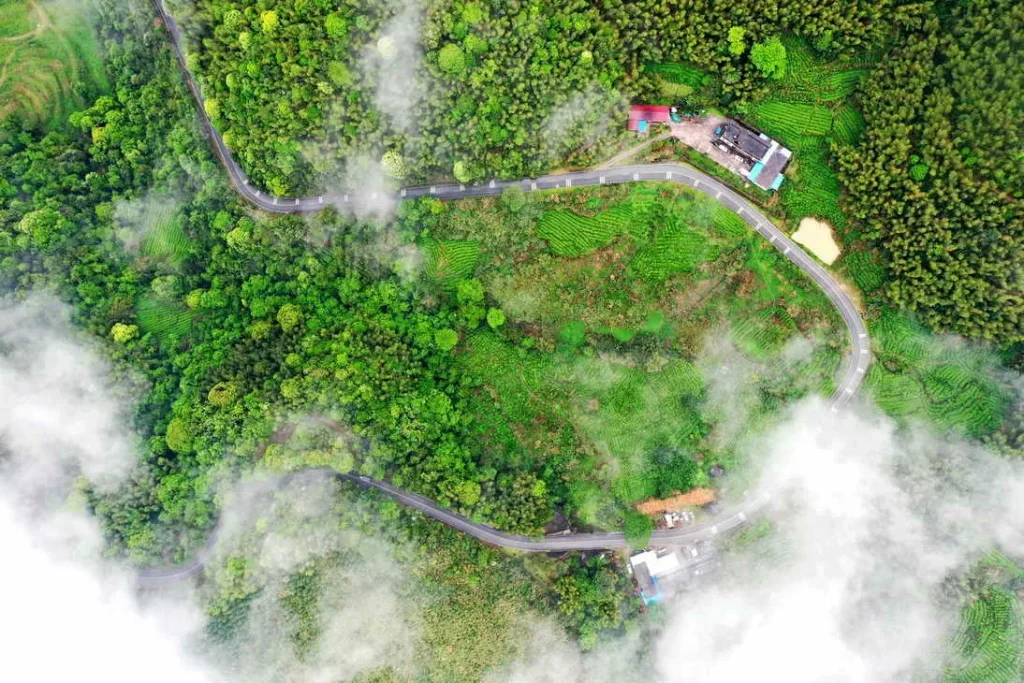
Shaoguan tea is not a single tea — it is a regional classification covering all tea produced within Shaoguan prefecture-level city in northern Guangdong (Yuebei). The region spans 18,400 km² and encompasses several tea-producing areas, each with its own history, cultivars, and microclimate.
Key identifiers:
- Location: 24°48′N 113°35′E, northern Guangdong, bordering Hunan (NW) and Jiangxi (NE)
- Elevation: 250–1,600 meters across the main tea zones
- Climate: Humid subtropical monsoon with over 100 foggy days per year; annual rainfall 1,600 mm; day-night temperature differential up to 10°C
- Soil: Red sandstone and conglomerate from Cretaceous-period Danxia formations, rich in minerals; pH 4.4–6.5
- Forest cover: 86–89% in the core tea-producing townships
- Ancient trees: Over 40,000 wild ancient tea trees in Luokeng alone, some exceeding 800 years in age
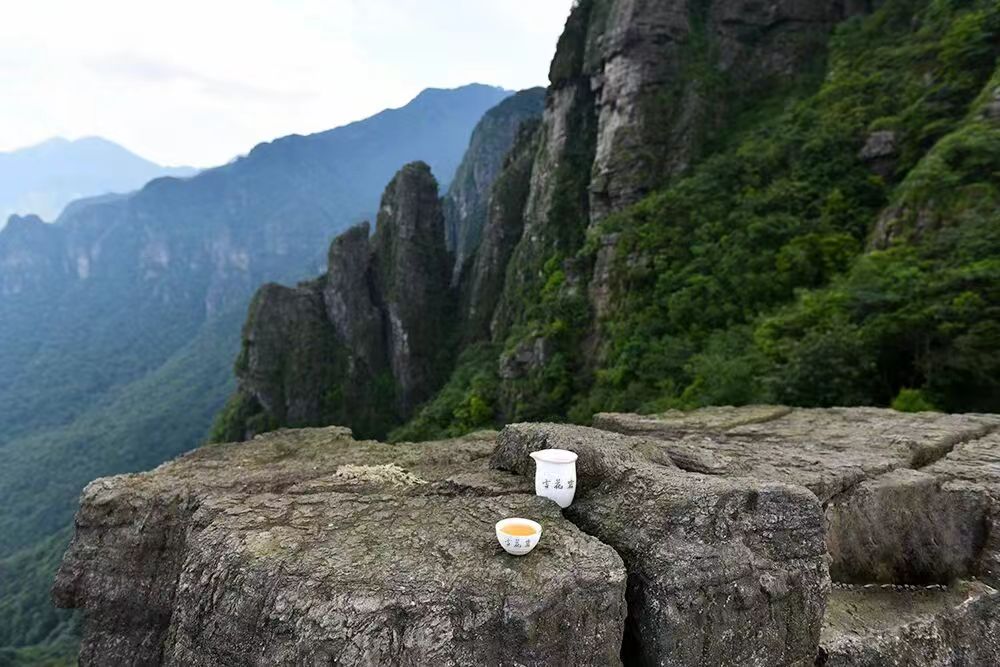
Shaoguan teas are defined by their origin in the Danxia UNESCO Global Geopark — a landscape of red sandstone pillars, deep gorges, and mineral-rich soil that imparts a distinct character to every leaf grown here.
Where Does Shaoguan Tea Come From?
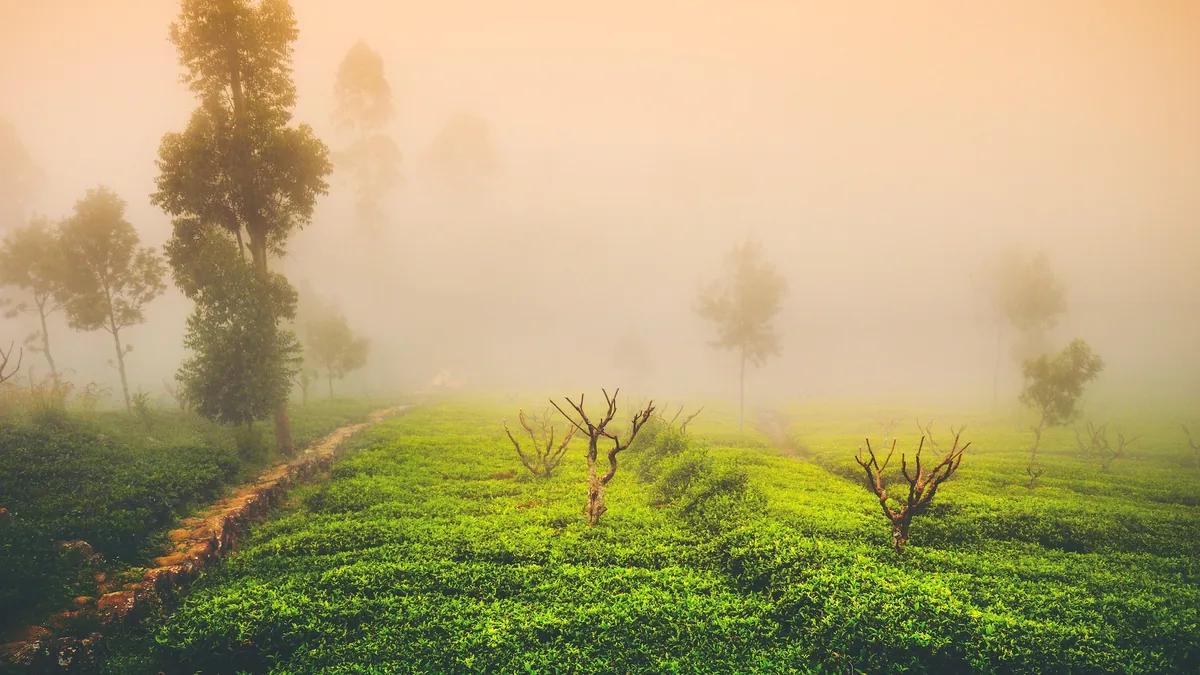
Shaoguan’s tea production spans several distinct areas, each with its own history, cultivars, and character:
1. Luokeng — The Ancient Tree Sanctuary
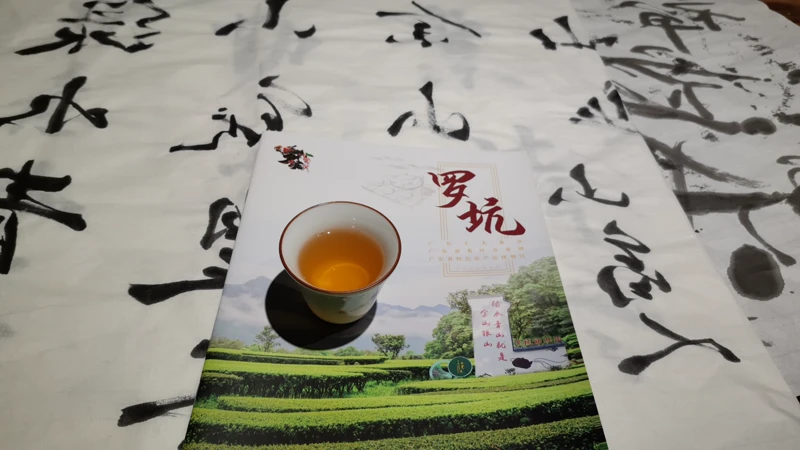
Luokeng Town (罗坑镇), Qujiang District, is home to over 40,000 wild ancient tea trees, some 800+ years old. The tea grows within the Crocodile Lizard National Nature Reserve (鳄蜥国家级自然保护区) at 600–1,200 meters elevation, where slash-and-burn cultivation has preserved the trees in a near-wild state — no pesticides, no fertilizers, no irrigation. Luokeng black tea is famous for its signature almond aroma, a natural fragrance found nowhere else in Guangdong. Key brands: Snow Flower Rock (雪花岩) (雪花岩) and Monkey-Picked Red (猴采红) (猴采红).
2. Renhua — The Imperial White Tea
Renhua County (仁化县), Hongshan Town, has a tea history spanning 1,200+ years. Its white hair tea (白毛茶) became an imperial tribute during the Ming Jiajing era (1522–1566). In 2014, Renhua Baimao received National Geographical Indication Protection. The key cultivars, Danxia #1 and Danxia #2, grow on the slopes of Danxia Mountain at 250–1,200 meters, where 89% forest cover and mineral-rich sandstone soil create ideal conditions. GI specifications require soil pH 4.4–6.5, depth ≥55 cm, and organic matter ≥2.2%. Explore Renhua teas →
3. Lechang — Mountain Mist White Tea
Lechang City (乐昌市), Yanxishan Tea Farm, covers 2,000 mu (~133 hectares) at 600–1,300 meters in the Nanling Mountains. With over 100 foggy days per year, 80% humidity, and a 10°C day-night temperature swing, the arbor-type large-leaf cultivar produces a white hair tea (白毛尖) of exceptional quality — jade-green liquor, mellow sweetness, and a lingering finish. Lechang Baimaojian received National Geographical Indication Protection in 2020.
Together, these areas produce the full spectrum of Shaoguan tea — from the almond-aroma black teas of Luokeng to the imperial white teas of Renhua and the mountain mist teas of Lechang.
What Makes Shaoguan Tea Special?
Four factors set Shaoguan tea apart from other Chinese tea regions:
① Ancient, Wild-Growing Trees
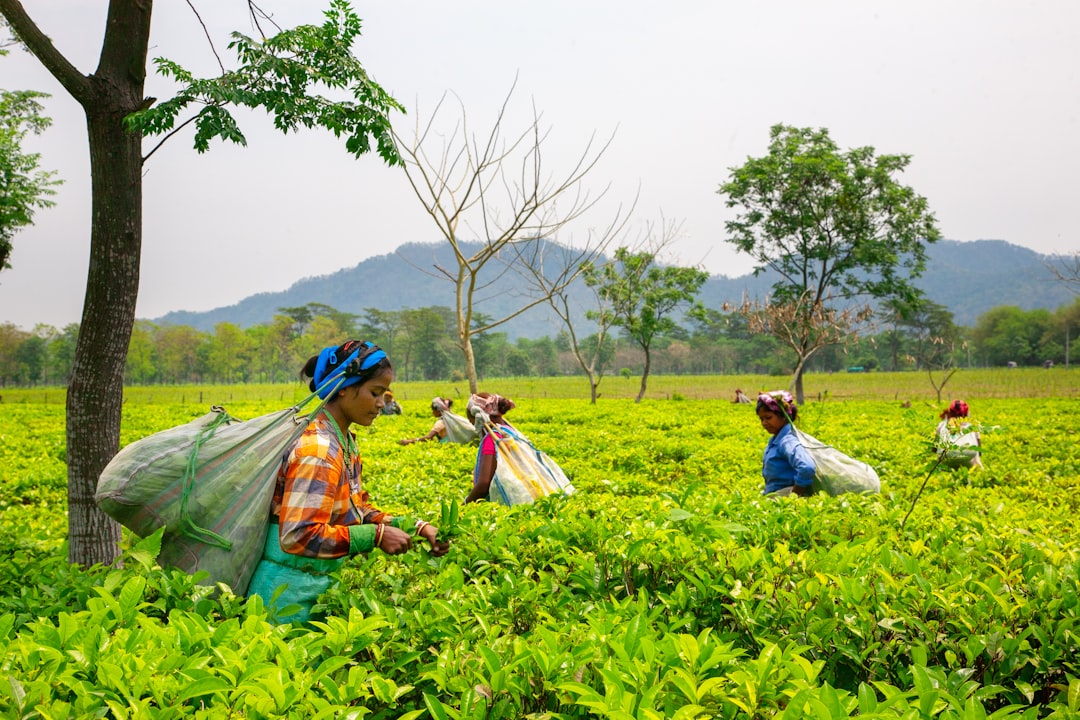
Luokeng’s 40,000+ ancient trees grow wild in a protected nature reserve. Without human intervention — no fertilizers, no pesticides, no pruning — these trees develop deep root systems that draw complex minerals from the Danxia sandstone. Tea from old trees (树龄 >100 years) contains higher amino acid and lower caffeine levels than plantation tea, producing a smoother, sweeter liquor with greater depth.
② The Almond Aroma
Luokeng high-mountain black tea exhibits a natural almond aroma — a fragrance so distinctive it functions as a regional signature. This compound profile, resulting from the combination of ancient tree genetics, high-altitude mist, and mineral-rich soil, is virtually unknown in other Guangdong tea origins. First-time drinkers often identify it before being told.
③ Danxia Terroir
The Danxia landform — a UNESCO World Heritage site — provides the geological foundation for Shaoguan tea. The red sandstone and conglomerate bedrock, formed during the Cretaceous period, weathers into well-drained, mineral-rich soil with pH 4.4–6.5. This terroir imparts a distinctive mineral backbone and complexity that distinguishes Shaoguan teas from those grown on the volcanic soils of Fujian or the alluvial plains of Yunnan.
④ Full Traceability
Every Shaoguan tea batch from Veritea is GPS-traceable to its source village, lab-tested for quality and safety, and tagged with a unique 16-digit verification code. Two of Shaoguan’s tea areas hold National GI Protection, and both Renhua and Lechang Baimao teas are part of Guangdong’s emerging digital traceability initiative using 5G, IoT, and big data tracking from tree to cup. See the traceability system →
Types of Shaoguan Tea
Shaoguan produces six categories of tea, making it one of the most diverse tea origins in China:
| Type | Example | Character |
| Black (Hongcha) 红茶 | Luokeng high-mountain black, Renhua Baimao black | Almond aroma, amber liquor, golden tips, floral sweetness |
| White Hair (Baimao) 白毛茶 | Renhua Baimao, Lechang Baimaojian | Silver down on leaf, orchid scent, mellow, GI-protected |
| Green (Lücha) 绿茶 | Renhua Baimao green, Wengyuan organic Longjing | Jade-green infusion, chestnut aroma, fresh and clean |
| Oolong 乌龙 | Danxia rock oolong, Huang Guan Yin (Tieguanyin-105) | Mineral notes from sandstone, floral, layered |
| Yellow (Huangcha) 黄茶 | Historical Shaozhou yellow tea | Documented in Tang Dynasty Classic of Tea |
| Ripe/Heicha (黑茶) | Traditional Luokeng ripe tea | Aged, smoky character — Guangdong’s oldest ripe tea |
For first-time buyers, we recommend starting with the black tea range — Luokeng’s almond-aroma black teas are Shaoguan’s most distinctive offering and the safest entry point for international palates accustomed to Assam, Darjeeling, or Kenyan black teas.
How Does Shaoguan Tea Taste?
The tasting profile varies by region and processing method, but most Shaoguan teas share a common thread: smoothness, sweetness, and complexity — a direct result of the ancient tree genetics and high-altitude growing conditions.
- Luokeng black tea: Almond and honey on the nose; medium body with a silky mouthfeel; sweet, clean finish with zero astringency. The liquor is bright amber, almost golden. Remarkably, the flavor holds for 2–3 days without spoiling — a trait unique to this origin.
- Renhua white hair tea: Light orchid fragrance; the liquor is pale jade-green or golden depending on oxidation; mellow with a lingering sweet aftertaste. Fresh, vegetal notes with a creamy texture.
- Lechang Baimaojian: Clean, crisp, mineral-driven; the high-altitude (600–1,300 m) growing conditions produce a tight, silvery leaf and a transparent, sweet liquor with no bitterness.
- Monkey-Picked Red tea: Full-bodied with pronounced stone fruit sweetness; notes of dried plum, honey, and a hint of warming spice. Rich amber liquor.
The almond aroma of Luokeng black tea is widely recognized as one of Guangdong’s most distinctive tea characteristics — delicate yet unmistakable, with a smoothness that sets it apart from other Chinese black teas.
How to Brew Shaoguan Tea
| Tea Type | Temp | Leaf:Water | Time | Infusions |
| Luokeng Black (almond aroma) | 90–95°C | 3g / 150ml | 2–3 min | 3–4 |
| Renhua Baimao (white hair) | 80–85°C | 3g / 150ml | 2–3 min | 3–4 |
| Lechang Baimaojian | 80–85°C | 2.5g / 150ml | 2 min | 3–4 |
| Monkey-Picked Red | 90°C | 3g / 150ml | 2–3 min | 3 |
| Green (fresh) | 75–80°C | 2.5g / 150ml | 1.5–2 min | 2–3 |
Pro tip: Use filtered water. Shaoguan teas are naturally sweet and smooth — the fewer impurities in your water, the more the tea’s character shines. For Gongfu style, multiply leaf quantity by 2–3x and steep for 15–20 seconds, adding 5 seconds per subsequent infusion.
The History of Shaoguan Tea
Shaoguan’s tea heritage runs deep. In 760 CE, Lu Yu’s Classic of Tea — the world’s first treatise on tea — recorded: “Tea grows in Shaozhou (Shaoguan); its flavor is excellent.” He also documented yellow tea production in the region.
- Tang Dynasty (618–907): Shaoguan tea (then Shaozhou) recorded in Lu Yu’s Cha Jing
- Ming Dynasty (1368–1644): Renhua white hair tea created; county annals document four tea types
- Qing Jiaqing era (1796–1820): Renhua white hair becomes imperial tribute; Luokeng tea documented for overnight keeping quality
- 2014: Renhua Baimao receives National GI Protection
- 2019: Luokeng tea listed as National Famous, Special & New Agricultural Product
- 2020: Lechang Baimao receives National GI Protection
- Today: Luokeng black tea techniques recognized as Shaoguan Intangible Cultural Heritage
This continuous record — from the Tang Dynasty to the present day — makes Shaoguan one of China’s best-documented yet least-exported premium tea origins.
Where to Buy Shaoguan Tea
We source directly from Shaoguan’s core tea areas — Luokeng, Renhua, and Lechang — and ship worldwide via EMS. Every order includes a unique 16-digit verification code for batch traceability, GPS coordinates of the source village, and a lab report.
First time ordering from China? Read our FAQ and shipping policy for everything you need to know about delivery, customs, and returns.
📖 Further reading:
- Lechang Terroir: Where Mountain Mist Shapes a Unique Black Tea
- The Yao Tea-making Techniques of Luokeng
Sources & References
- Shaoguan Tea Industry Association — Regional tea classification data
- Lu Yu’s “Classic of Tea” (760 CE) — Historical references to Shaoguan
- Guangdong Tea Research Institute — Cultivar and terroir studies
References & Sources
- Shaoguan — Baidu Baike — Geographic data: area (18,400 km²), coordinates (24°48′N), elevation ranges, climate (annual rainfall 1,600 mm), forest cover
- Luokeng Town — Baidu Baike — Ancient tea tree population (40,000+ trees), protected nature reserve status, elevation data
- Danxiashan UNESCO Global Geopark — UNESCO designation, red sandstone geology, biodiversity context
- Lu Yu — The Classic of Tea (茶经), 760 CE — Earliest written record of tea in the Yuebei (northern Guangdong) region
- Veritea® Traceability Program — Documentation methodology: lab testing, GPS tracking, batch archive
• Glossary of Tea Terms — Key places, people, and concepts
• Shop the Collection — Browse all products
• Veritea Promise — Quality & traceability