Qujiang District — The Ancient Tea Heartland of Shaoguan
**Qujiang (曲江区)** sits at the center of Shaoguan’s tea story — a district where over 40,000 wild ancient tea trees grow in a protected nature reserve, and where the legendary almond aroma black tea was first discovered in 2010.
At a Glance
| Detail | Value |
|---|
|——–|——-|
| **Location** | South-central Shaoguan, northern Guangdong |
|---|---|
| **Area** | 1,620.77 km² |
| **Population** | ~310,000 |
| **General Elevation** | 80–200 m |
| **Tea-Growing Elevation** | 500–1,200 m (Luokeng Nature Reserve) |
| **Average Temperature** | 21.1°C |
| **Annual Rainfall** | 2,065 mm |
| **Forest Cover** | 74.7% |
| **Signature Tea** | Wild ancient tree black tea (almond aroma) |
| **Ancient Trees** | 40,000+ wild ancient tea trees |
| **Protected Area** | Luokeng Crocodile Lizard National Nature Reserve |
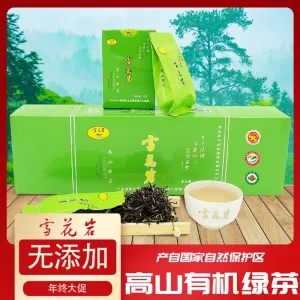
| **Key Producer** | Xuehuayan (Snow Flower Rock — 雪花岩) |
Geography & Terroir
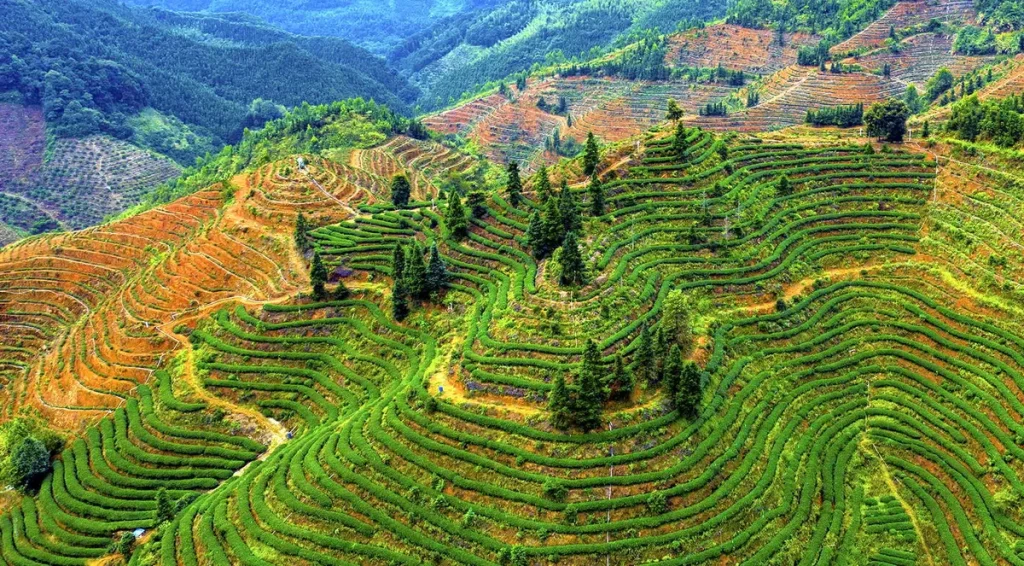
Qujiang District occupies the south-central portion of Shaoguan City, stretching from the urban center of Maba Town northward into the steep forested mountains of the Nanling range. Its general elevation runs 80–200 meters, but the tea-growing areas in the Luokeng region climb to 500–1,200 meters — a dramatic shift that creates distinct microclimates within a single district.
The bedrock geology is dominated by **red sandstone and conglomerate** — the same Danxia formation that makes nearby Mount Danxia world-famous. Weathered over millennia, this rock weathers into well-drained, mineral-rich acidic soils (pH 4.5–5.5) that are ideal conditions for the *Camellia sinensis* plant. The sandstone substrate contributes trace minerals that influence the aromatic profile of the tea, particularly the benzaldehyde compounds responsible for the almond aroma.
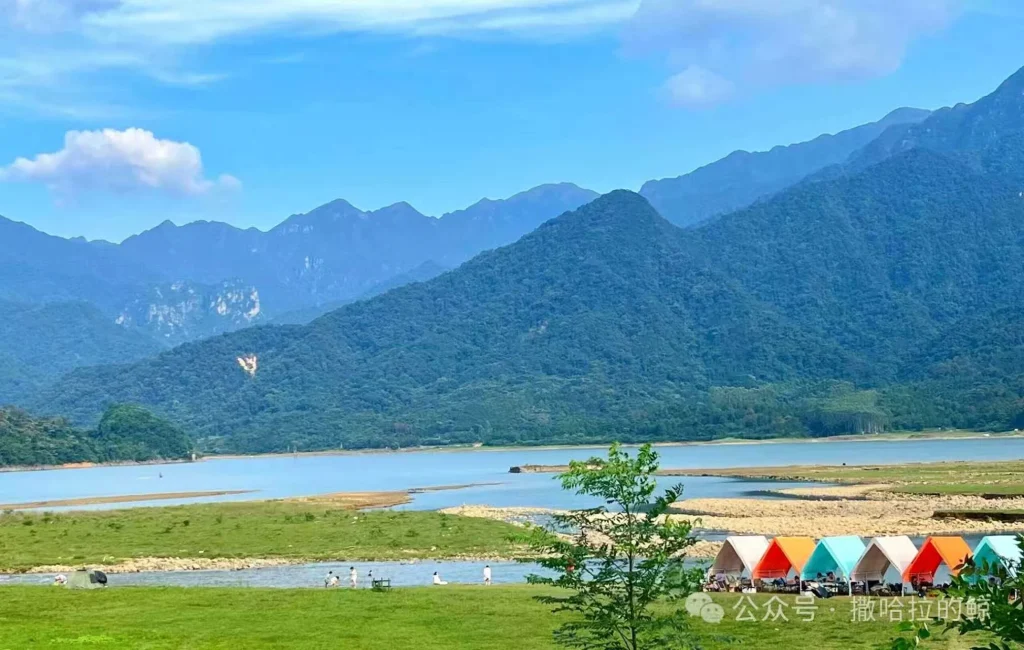
The district’s most significant natural feature is the **Guangdong Luokeng Crocodile Lizard National Nature Reserve** (广东罗坑鳄蜥国家级自然保护区), an 18,814-hectare protected subtropical forest named after the rare Chinese crocodile lizard (*Shinisaurus crocodilurus*), a living fossil species that has survived for over 100 million years. This reserve functions as a natural sanctuary for wild tea trees: no chemical agriculture, logging, or development is permitted within its boundaries.
Qujiang receives 2,065 mm of rainfall annually with an average temperature of 21.1°C. The combination of high humidity, frequent mist cover, and the temperature-buffering effect of the Nanling range creates the slow growth conditions that concentrate flavor compounds in tea leaves. Tea pickers in the reserve often work in mist until mid-morning, when the sun finally burns through the canopy.
Tea Heritage
Tea cultivation in Qujiang dates back over 1,000 years. The indigenous **Yao ethnic minority** communities living in Luokeng’s mountains have harvested wild tea from these ancient forests for generations, passing down techniques orally from elder to youth. Their methods — sun-drying on bamboo trays, charcoal roasting, and hand-rolling — are recognized as Shaoguan Intangible Cultural Heritage.
The modern chapter of Qujiang’s tea story began in **2010**, when tea master Li Yuming and national scientist Chen Dong undertook a 72-hour expedition into the Xuehuayan (Snow Flower Rock) area of Luokeng. Their mission: to verify reports of a wild tea with an unusually pronounced almond fragrance. They found it — and scientific analysis later confirmed that the aroma was caused by naturally occurring **benzaldehyde**, accounting for approximately 40% of the tea’s aromatic profile, with supporting compounds including phenylacetaldehyde (honey-like) and linalool (floral).
This discovery put Qujiang on the map of China’s specialty tea world. The almond aroma black tea from Xuehuayan is now classified as a distinct terroir-expressive tea, prized by collectors and connoisseurs for its unique organoleptic profile that cannot be replicated elsewhere.
Signature Teas
The defining tea of Qujiang District is **almond aroma wild ancient tree black tea** from Xuehuayan in Luokeng. Unlike flavored teas where almond essence is added, this fragrance develops naturally through four factors:
- The specific wild ancient tree cultivar, including the rare **Pan-Tao (蟠桃, “flat peach”)** variety found exclusively near Xuehuayan
- The mineral-rich red sandstone soil that provides unique trace elements
- The misty highland microclimate at 600–1,200 meters
- Traditional craft black tea processing with careful oxidation and roasting
The 40,000+ wild ancient tea trees in the reserve range from 100 to over 800 years old. These trees have never been planted or pruned — they grow wild in the forest, some reaching 3–6 meters tall. Their deep root systems penetrate 5–10 meters into the red sandstone substrate, accessing minerals and water that shallow-rooted plantation bushes cannot reach. This is why older trees produce more complex tea: their roots have had centuries to explore the soil profile.
Beyond the flagship almond aroma black tea, Qujiang also produces:
- **High-mountain organic black tea** — a woody-sweet floral profile with honey notes from managed gardens at 600–900 meters
- **High-mountain organic green tea** — pan-fired with a clean, vegetal character and chestnut sweetness
- **Wild ancient tree white tea** — a limited-production tea from bud-only harvests of old-growth trees
Local Culture
Qujiang’s tea culture is inseparable from the **Yao ethnic minority** tradition. The Yao people of Luokeng have maintained a continuous tea-gathering tradition for over 1,000 years. Every spring, tea pickers in traditional Yao costumes — embroidered indigo tunics and silver ornaments — harvest the tender buds from ancient trees in the reserve. This living tradition is more than cultural performance. “Every family here knows how to make tea,” says 72-year-old grandmother Pan, a living repository of Yao tea knowledge. “Our grandfathers learned from their grandfathers. It’s not just a drink — it’s our memory.”
The district is also the birthplace of **Northern Guangdong Tea-Picking Opera** (粤北采茶戏), a form of folk opera recognized by the national intangible cultural heritage list. Originating in the tea-growing communities of the region, it combines singing, dancing, and comic performance with themes drawn from tea farming life.
Qujiang is also home to the **Maba Man site** — one of China’s most important paleoanthropological discoveries — where a human skull dated to 129,000 years old was found in a limestone cave in 1958. This prehistoric legacy adds to the district’s sense of deep natural and human history.
Notable Producers
Xuehuayan (Snow Flower Rock) — 雪花岩
The primary producer carrying Qujiang’s tea heritage to the world is **Guangdong Xuehuayan Tea Co., Ltd.**, founded in 2011 and based in Luokeng Town. The company operates its own 1,500+ mu (100 hectares) of tea gardens and cooperative farmer gardens covering over 7,500 mu (500+ hectares).
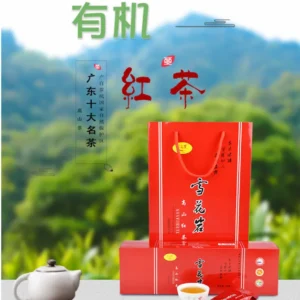
Xuehuayan teas have been **China Organic Certified for 11 consecutive years**. Their high-mountain black tea has been named a “Guangdong Famous Product” and one of the “Top Ten Famous Teas of Guangdong.” Through collaboration with the Tea Research Institute of the Guangdong Academy of Agricultural Sciences, the company has refined its signature flavor profiles — woody-sweet almond, woody-sweet floral, and sweet, mellow roundness.
**Key offerings from Xuehuayan:**
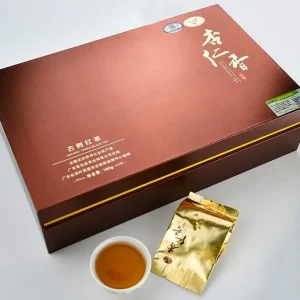
- **Snow Flower Rock Wild Ancient Tree Black Tea (Almond Aroma)** — XHY-01, Master Select grade, $480. The definitive almond aroma experience from 100–800 year old trees. Veritea score 122.
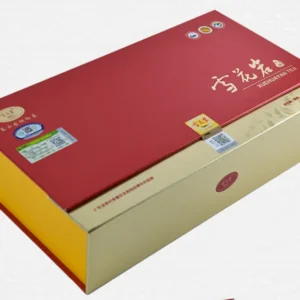
- **Snow Flower Rock Reserve Ancient Tree Black Tea** — XHY-16, Reserve grade, $85. Woody-sweet floral profile with honey notes. Veritea score 123.
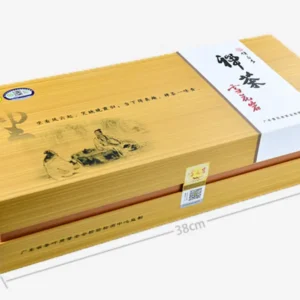
- **Snow Flower Rock Zen Tea (Wild Ancient Tree Black Tea)** — XHY-18, Reserve grade, $98. Bold, woody-sweet brew. Veritea score 113.
All Xuehuayan products come with **Veritea traceability** — each batch is GPS-tracked and lab-tested, allowing you to trace the tea from leaf to package. The Veritea system provides batch-specific data including harvest GPS coordinates in the Luokeng reserve, processing date, comprehensive pesticide residue screening, heavy metal analysis, and a Veritea flavor score. This level of transparency is rare in the Chinese tea industry and gives buyers confidence that what’s on the label matches what’s in the package.
Visiting Qujiang
For tea tourists, Qujiang offers the most compelling destination in Shaoguan. The Luokeng Nature Reserve is accessible from the district capital of Maba Town via a 40-kilometer drive north into the mountains. Spring (March–April) is the ideal visiting season, when the ancient trees are in full flush and the Yao community holds its annual tea harvest ceremonies.
The Xuehuayan tea factory in Luokeng Town offers visits by appointment, where you can see the processing facility, walk the organic gardens, and taste the full range of Xuehuayan products. The surrounding reserve has basic hiking trails through the ancient tea tree forests, though a local guide is recommended — the old-growth sections of the reserve are not signposted.
Explore Shaoguan Tea
This article is part of a series exploring Shaoguan’s tea districts. Each district has its own distinct character — from the organic ecological plantations of Shixing County to the high-altitude Baimaojian black teas of Lechang.
👉 **Browse all Shaoguan teas** — including the full range of Xuehuayan teas from Qujiang.
Recommended Products from Qujiang
If you’re ready to explore Qujiang’s teas, here are the top recommendations based on experience level:
**For newcomers:** Snow Flower Rock Reserve Ancient Tree Black Tea (XHY-16, $85) — the honey-sweet profile is the most accessible entry point to wild ancient tree teas, with a Veritea score of 123.
**For collectors:** Snow Flower Rock Wild Ancient Tree Black Tea (Almond Aroma) (XHY-01, $480) — the flagship almond aroma experience from 100–800 year old trees, Veritea score 122.
**For daily drinking:** Snow Flower Rock Zen Tea (XHY-18, $98) — a bold, woody-sweet brew that delivers consistent quality for everyday gongfu sessions.