Shixing County — Where Ecological Organic Tea Meets Chebaling Wilderness
**Shixing County (始兴县)** sits in the northeastern corner of Shaoguan, bordering Jiangxi province. Here, tea is cultivated not in ancient wild forests but in carefully managed organic gardens that draw their purity from one of Guangdong’s most biodiverse protected areas: the Chebaling National Nature Reserve.
At a Glance
| Detail | Value |
|---|
|——–|——-|
| **Location** | Northeastern Shaoguan, bordering Jiangxi province |
|---|---|
| **Area** | 2,131 km² |
| **Population** | ~260,000 (urban ~196,700) |
| **Tea-Growing Elevation** | 400–800 m |
| **Highest Peak** | Guanyindong — 1,428 m |
| **Average Temperature** | 19.6°C |
| **Annual Rainfall** | 1,468 mm |
| **Forest Cover** | 77.7% |
| **Protected Area** | Chebaling National Nature Reserve (adjacent) |
| **Water System** | Convergence of three rivers — Zengjiang, Lianjiang, and Wengjiang |
| **Key Producer** | Sankashui (Three Rivers — 三卡水) |
Geography & Terroir
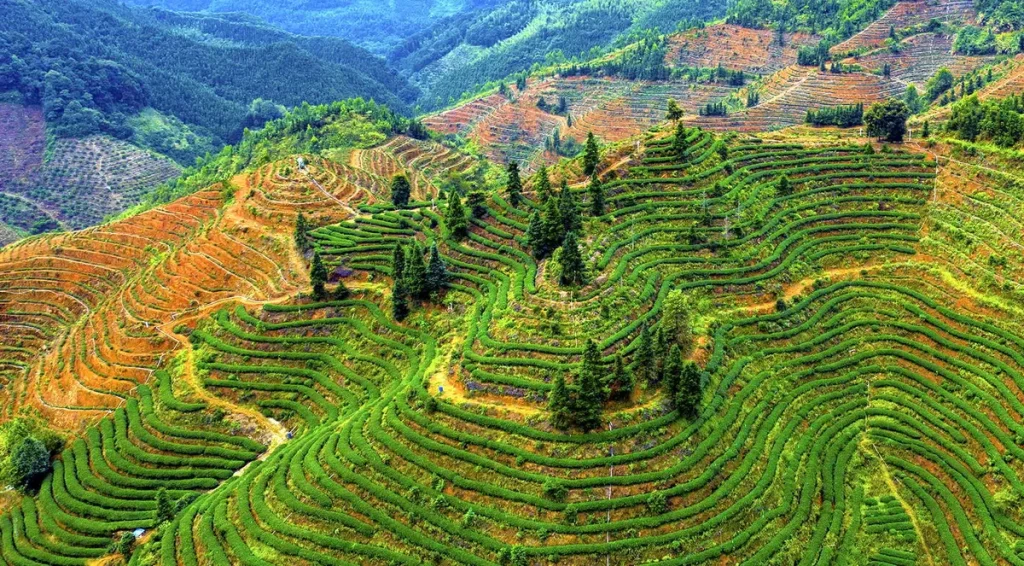
Shixing County sits in the northeastern corner of Shaoguan, where the Nanling mountain range meets the border with Jiangxi province. Its terrain rises steeply from southern river valleys to the high peaks of Chebaling at 1,428 meters. Tea gardens are concentrated on the southern slopes between 400 and 800 meters, with some plots reaching above 1,000 meters.
The county’s tea identity is shaped by water. Three major rivers — the **Zengjiang, Lianjiang, and Wengjiang** — converge near the Chebaling National Nature Reserve, creating a watershed that supplies clean mountain water to the surrounding tea gardens. The name of Shixing’s primary tea producer, **Sankashui (Three Rivers)**, pays homage to this hydrological feature. The ongoing flow of clean, mineral-rich water from the protected reserve is the single most important factor in Shixing’s tea quality.
The dominant soil types are **weathered granite and sandstone derivatives** — well-drained, slightly acidic (pH 4.5–5.5), and rich in trace minerals. These soils produce teas with a distinctive **mineral freshness** and clean finish that sets Shixing apart from the more aromatic profiles of neighboring Qujiang.
Shixing’s climate is cooler than much of Guangdong due to its higher average elevation. With an annual average temperature of **19.6°C** and **1,468 mm of rainfall**, the county experiences significant diurnal temperature variation — especially in spring and autumn when tea quality peaks. Frequent cloud cover during the growing season provides natural shade, slowing leaf development and concentrating flavor precursors.
The county’s forest cover of **77.7%** is among the highest in Shaoguan and all of Guangdong province. This extensive forest cover creates natural buffers against pollution and pest migration, forming the foundation of Shixing’s identity as an ecological organic tea region.
Tea Heritage
Shixing’s tea tradition is newer than some of its neighboring counties, but it is defined by a deliberate commitment to **ecological organic production**. Rather than following the path of high-intensity plantation agriculture, Shixing’s tea growers chose to work within the constraints of the mountain ecosystem — a decision shaped largely by the proximity of the **Chebaling National Nature Reserve**.
**Chebaling (车八岭)** is one of the best-preserved mid-elevation subtropical evergreen broadleaf forests in southern China. Established in 1983 and elevated to national status in 1988, it protects 7,545 hectares of pristine forest ecosystem:
| Category | Count |
|---|
|———-|——-|
| Higher plant species | 1,642 |
|---|---|
| Wildlife species | 1,225 |
| Rare tree species | Ancient gymnosperms, tree ferns, 200+ medicinal plants |
The reserve hosts rare populations of *Cathaya argyrophylla* — a living fossil conifer that predates the last ice age — and provides habitat for clouded leopards, pangolins, silver pheasants, and the Chinese giant salamander.
For tea production, the reserve’s value extends beyond its boundaries. The protected forest ecosystem creates a **natural buffer zone** that filters air and water, controls pest populations through intact food chains, and maintains consistent humidity levels. Tea gardens within 5–10 kilometers of the reserve boundary benefit from these ecological services, making organic certification more viable here than in less pristine regions.
Shixing’s teas are produced under the **Small Food Production Workshop Registration** system, with laboratory-tested certifications for both black and green tea. The region has been steadily building a reputation for consistently high-quality ecological tea through regional competition awards and growing export interest.
Local Culture: Hakka Weilong Houses and Yao Villages
Shixing County is rich in cultural heritage that complements its tea story.
The Mantang Hakka Great Enclosure
The most iconic structures in Shixing are the **Hakka weilong houses (围龙屋)** — fortified communal residences built by Hakka settlers from the Ming dynasty onward. The **Mantang Hakka Great Enclosure (满堂客家大围)** is the largest and best-preserved example in Guangdong. Built in 1833 during the Daoguang period of the Qing dynasty, this massive rectangular fortress measures 178 meters long and 83 meters wide, with walls up to 8 meters thick. It contains 777 rooms arranged in a symmetrical layout designed for defense, communal living, and ancestral worship.
The Hakka people, who migrated south into Guangdong over centuries, brought with them a strong tea-drinking culture. Hakka **lei cha (擂茶, “thunder tea”)** — a pounded mixture of tea leaves, ginger, garlic, peanuts, sesame, and sometimes green beans — is still prepared in Shixing’s Hakka communities. This nourishing tea soup, served with rice and vegetables, was originally a medicinal meal for travelers and laborers.
Yao Ethnic Villages
The **Shenshui Yao Ethnic Township (深渡水瑶族乡)** preserves the traditions of the Yao ethnic minority, who have lived in these mountains for centuries. Yao communities practice their own tea customs, including sun-drying fresh leaves in bamboo baskets and storing tea in woven gourds. Visiting these villages during the spring tea harvest offers a glimpse into a way of life that has changed little in generations.
Zhang Jiuling’s Legacy
Shixing is also the birthplace of **Zhang Jiuling (张九龄, 678–740)**, the renowned Tang dynasty chancellor and poet who served Emperor Xuanzong of Tang. His poetry often evoked the natural landscapes of his homeland — mountains, rivers, and mist-shrouded forests that are still visible in Shixing’s tea-growing areas today. He is remembered locally as one of the great Tang poets, and the region’s cultural identity is inseparable from his literary legacy.
Signature Teas
Sankashui Black Tea →
The flagship tea of Shixing, produced from carefully managed organic gardens. The flavor is **bright, clean, and naturally sweet** — a reflection of the mineral-rich granite soil and the pure water from the Chebaling watershed. The liquor is bright amber with a brisk, refreshing character and a clean mineral finish.
Sankashui Green Tea →
Shixing also produces a green tea from the same organic gardens. The processing uses a light kill-green (fixation) step followed by careful rolling, preserving the leaf’s natural vegetal freshness. The result is a jade-clear cup with subtle chestnut sweetness and a crisp, clean finish.
Both black and green teas from Shixing share a common thread: **terroir-driven clarity**. The absence of pesticides and synthetic fertilizers means the tea’s flavor comes from the leaf itself and the soil it grew in — not from inputs.

Notable Producers
Sankashui (Three Rivers — 三卡水)
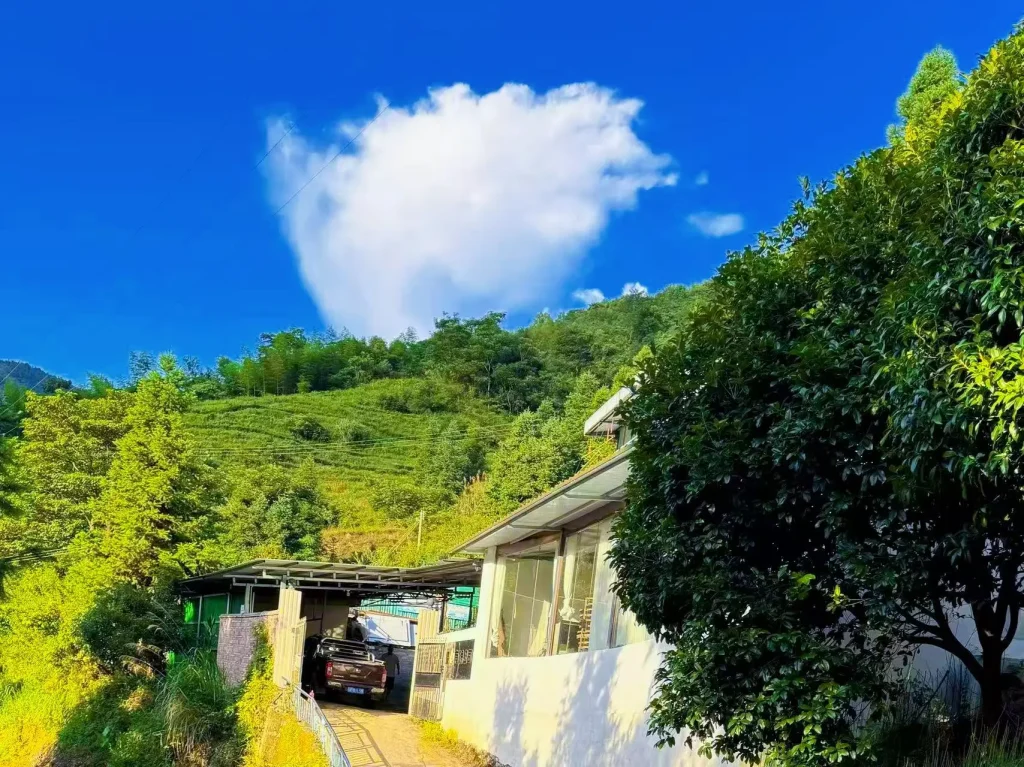
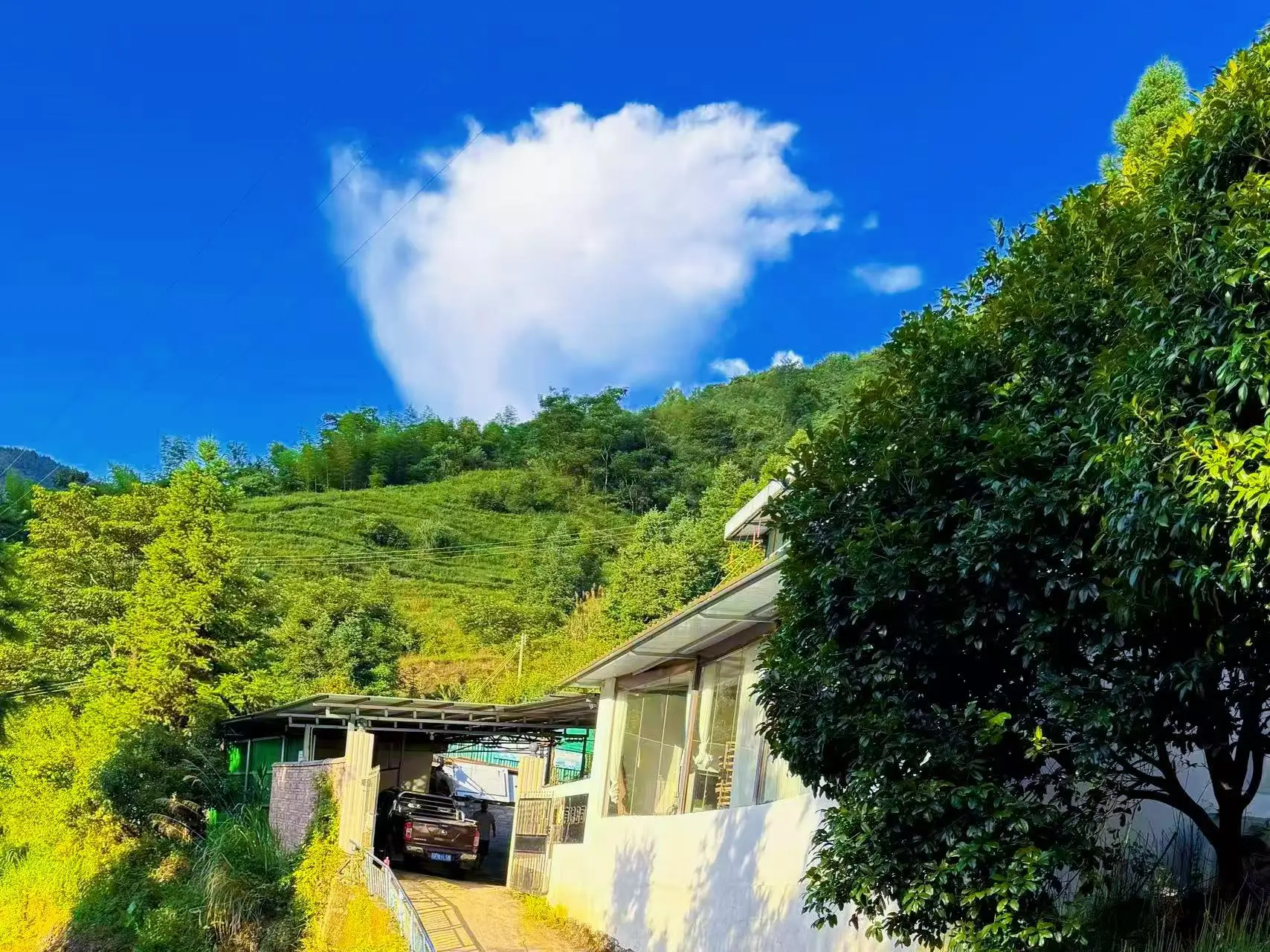
The primary producer carrying Shixing’s tea tradition is **Sankashui (Three Rivers)**, a brand of Shaoguan Tianjun Tea Co., Ltd. Based at the junction of Mashi Town and Luyuan Yao Village, the company operates a high-altitude tea garden that benefits directly from the pristine ecosystem of northern Guangdong.
Sankashui teas are:
- Produced under ecological organic methods without synthetic pesticides or fertilizers
- Laboratory-tested for purity and food safety, with each batch screened for contaminants
- Awarded in regional tea competitions, reflecting steady quality improvement
- Available with Veritea batch traceability for full supply chain transparency
Explore Shixing’s teas: Three Rivers Premium Black Tea (SKS-01) · Three Rivers Premium Green Tea (SKS-02)
Visiting Shixing
Shixing is accessible from Shaoguan city center via a 50-kilometer drive northeast on Highway G6011 or by bus from the Shaoguan East bus station. The Chebaling Nature Reserve has an ecotourism center with hiking trails, bird-watching platforms, and a small museum showcasing the reserve’s biodiversity. The best time to visit for tea is April–May, when the spring harvest coincides with the peak blooming season for wildflowers.
The Mantang Hakka Great Enclosure is located in Longtouwei Village, approximately 30 kilometers from the county seat. It is open to visitors year-round with guided tours available. The Shenshui Yao Village can be visited in conjunction with a trip to the Sankashui tea farm, which welcomes visitors by appointment during harvest season.
Explore Shaoguan Tea
This article is part of a series exploring Shaoguan’s tea districts. Each district has its own distinct character — from the wild ancient tree forests of Qujiang to the high-altitude Baimaojian teas of Lechang.
If you’re new to Shaoguan teas, the **SKS-01 Three Rivers Premium Boxed Black Tea** ($98) is the flagship Shixing black tea — a Third Prize winner at the Shaoguan “Fengcai Cup” competition. For green tea lovers, the **SKS-02 Three Rivers Premium Boxed Green Tea (Jinguanyin)** ($98) offers a Special Gold Award-winning experience with its distinctive orchid fragrance.
👉 **Browse all Shaoguan teas**
The combination of pristine watershed, protected forest ecology, and organic farming practices makes Shixing a standout destination for tea lovers seeking clean, naturally flavorful teas that reflect the health of the land they come from.