Renhua County — The Origin of White Hair Tea
At a Glance
| Metric | Value |
|---|
|—|—|
| Area | 2,223 km² |
|---|---|
| Population | ~237,000 |
| Tea-growing elevation | 250–1,200 m |
| Annual avg. temperature | 19.6°C (67.3°F) |
| Annual rainfall | 1,665 mm (65.6 in) |
| Forest cover | 80.51% |
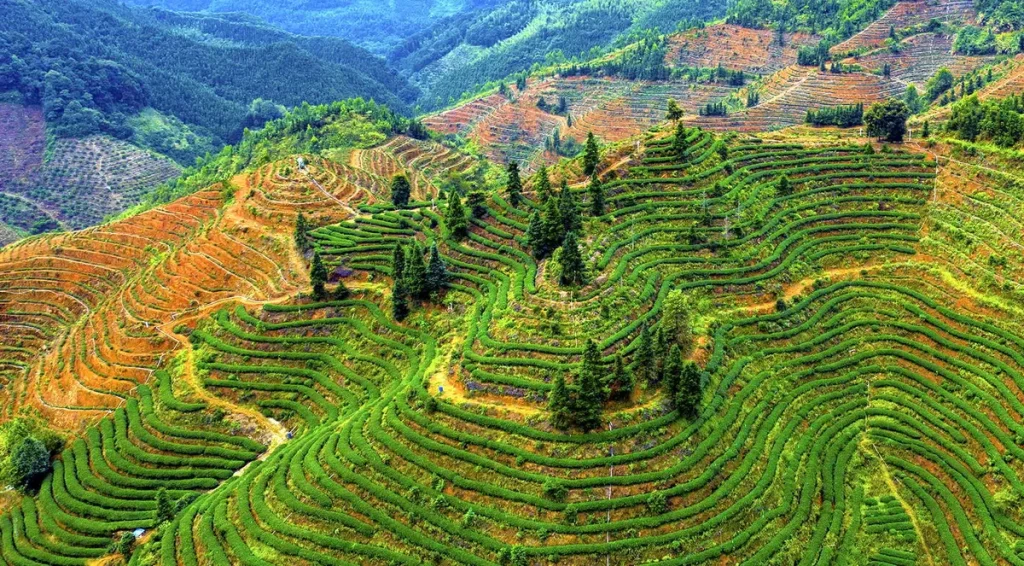
Nestled in the northern reaches of Shaoguan, Guangdong Province, Renhua County is a land where mist-cloaked mountains meet ancient tea traditions. With over 80% forest cover and elevations reaching 1,200 meters, Renhua provides the cool, humid microclimate that premium tea cultivars demand. Its red sandstone terrain, moderate temperatures averaging 19.6°C, and abundant rainfall of 1,665 mm per year create ideal conditions for slow-growing tea plants that develop deep, complex flavor profiles. The county sits at the southern foot of the Nanling mountain range — the climatic divide between subtropical southern China and the temperate north — giving it distinct seasonal shifts that tea trees respond to with concentrated spring growth.
Geography & Terroir
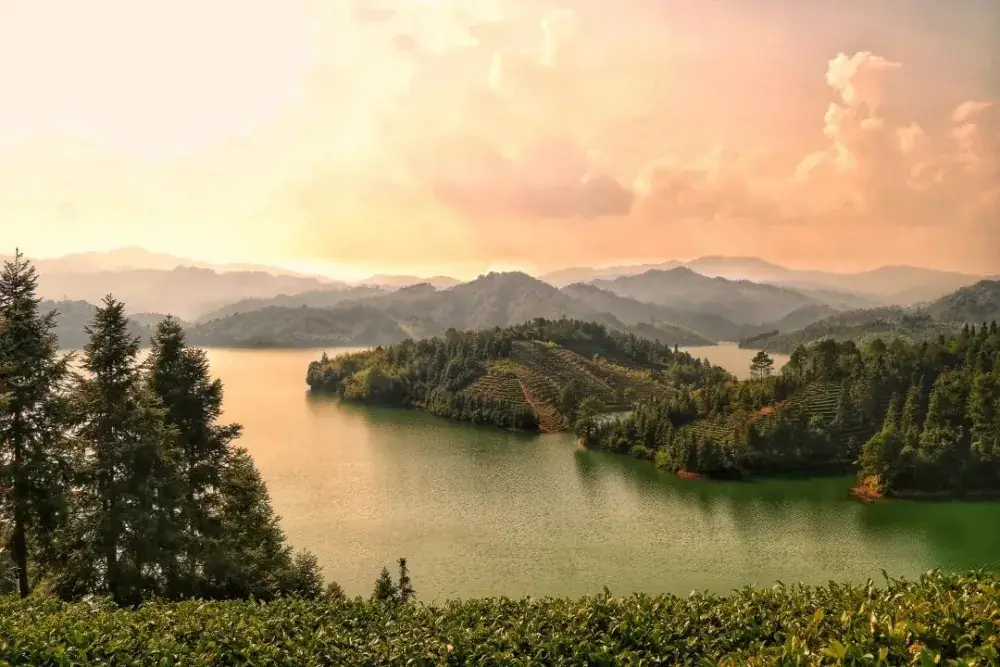
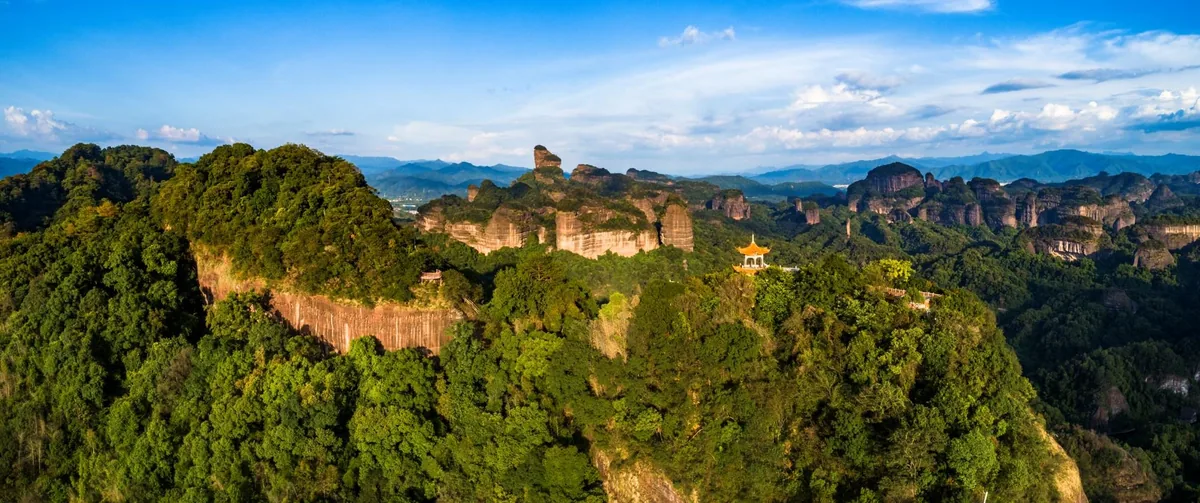
Renhua is home to the **Danxia Mountain** UNESCO World Heritage site, a geological wonder famous for its striking red sandstone pillars, cliffs, and natural rock formations spanning 290 km². The name “Danxia” means “rosy cloud” — a fitting description of the crimson-hued peaks that glow at sunrise and sunset. These same iron-rich red sandstone deposits form the bedrock of Renhua’s tea-growing soils, and their influence on the tea is measurable. The soils are predominantly acidic, with pH values ranging from 4.5 to 5.5 — the sweet spot for Camellia sinensis — and are rich in iron oxides, potassium, magnesium, and trace minerals that are absorbed by the tea roots and expressed in the final cup as a distinctive mineral backbone.
Situated along the southern edge of the Nanling mountain range, Renhua benefits from dramatic day-to-night temperature swings that average 8–12°C (14–22°F) of diurnal variation during the spring growing season. Cool Nanling breezes roll down the slopes at night, slowing leaf respiration and allowing complex aromatic compounds to accumulate rather than being metabolized away. This thermic effect — well documented in wine terroir research and directly analogous to premium wine-growing regions — means Renhua’s tea leaves build higher concentrations of L-theanine (the amino acid responsible for umami and relaxation) and volatile aromatic precursors. The result is tea with exceptional fragrance, smooth mouthfeel, and nuanced layers of flavor that cannot be replicated in lower, flatter terroirs.
The region’s acidic red and yellow soils, classified as Ultisols and Alfisols in the USDA soil taxonomy, are well-drained yet moisture-retentive — precisely the balance that tea plants need. These soils formed over millennia from the weathering of Danxia red sandstone and Quaternary granite deposits. They are naturally low in available phosphorus but rich in iron and aluminum oxides, which tea plants tolerate better than most crops. The organic matter content in untouched forest soils reaches 3–5%, contributing to the slow-release nutrition that supports steady, non-forced growth. Local farmers have understood this soil-moisture relationship for generations, carefully selecting hillside plots at elevations between 250 and 1,200 meters for optimal drainage, sun exposure, and protection from wind.
Tea Heritage
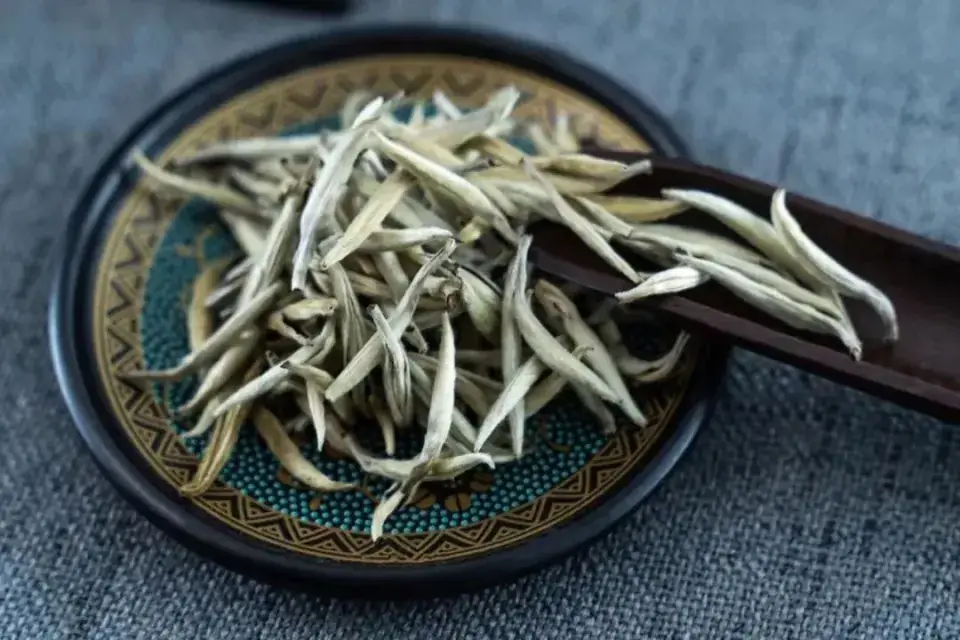
Renhua is the **origin county of Baimao (White Hair) tea**, a distinctive Guangdong tea variety characterized by the dense, silvery-white down (trichomes) that covers young leaf buds. This down is not just cosmetic — it’s a natural defense mechanism that protects tender buds from UV radiation and insect pests at high elevations. More importantly for the drinker, these trichomes are densely packed with amino acids — particularly theanine and glutamic acid — that contribute to the tea’s remarkable umami depth and lingering sweet aftertaste. The finest white hair teas contain trichome densities of over 2,000 hairs per square centimeter on the bud surface.
The tea culture here spans centuries. Local legend tells of a Ming Dynasty (1368–1644) herbalist named Chen who discovered wild tea bushes on Danxia Mountain during his search for medicinal plants. Noticing that the silver-haired young leaves brewed into a golden, honey-sweet liquor with remarkable clarity — and that drinking it alleviated his fatigue and thirst for hours — he shared his find with local villagers. Word reached the imperial court in Beijing, and the tea was designated a tribute tea, its fame spreading through Guangdong’s merchant networks and beyond. Historical records from the Qing Dynasty (1644–1912) mention “Danxia tea” as a prized local product in county gazetteers.
In 2014, **Renhua Baimao Tea** received official Geographical Indication (GI) protection under Chinese law (registration No. 2014-XXXX). This legal framework, equivalent to the EU’s Protected Designation of Origin (PDO) system, ensures that only tea grown, processed, and packaged within the designated Renhua County area — on defined hillside plots meeting specific elevation and soil criteria — can bear the Renhua Baimao label. The GI designation covers an area of approximately 1,200 km² of eligible tea-growing terrain within the county. For international buyers, this means a legally enforceable guarantee of origin: if it doesn’t say Renhua, it isn’t Renhua Baimao.
Today, over 5,000 hectares of tea gardens blanket Renhua’s hillsides, with annual production reaching approximately 6,000 tons of finished tea. Of this, roughly 40% is processed as black tea (hongcha), 35% as white tea (baicha), and the remainder as oolong and green teas. The county has become a pilgrimage site for tea connoisseurs seeking the original white hair tea experience, and more than 20 licensed tea processing enterprises operate within the GI-designated area.
Signature Teas
Renhua’s claim to fame in the tea world rests on two exceptional cultivars developed from local wild tea stock by the **Guangdong Academy of Agricultural Sciences (GDAAS)** Tea Research Institute. These cultivars were selected over a decade-long breeding program that screened hundreds of wild Baimao tea accessions from the Danxia Mountain slopes:
Danxia #1 (丹霞一号):** Bred from wild Renhua Baimao tea plants, Danxia #1 is a premium cultivar prized for its early spring budding (typically 7–10 days earlier than standard local varieties) and exceptional aroma density. Its leaves are small to medium in size and covered in a thick coat of silver-white down — the densest trichome coverage of any Renhua cultivar. When processed into white tea, Danxia #1 produces a pale golden infusion with notes of fresh hay, honey, osmanthus blossom, and a subtle floral sweetness that lingers on the palate for 30+ seconds after swallowing. The liquor is remarkably clear, almost crystalline. Processed as black tea, it yields a rich amber cup with cocoa undertones, a hint of dried apricot, and a long, clean finish with virtually no astringency.
Danxia #2 (丹霞二号):** A later-budding cultivar developed alongside Danxia #1 (budding 5–7 days after #1), Danxia #2 offers a distinctly different flavor spectrum. Its leaves are slightly larger and broader with a less dense but still prominent coat of white down. The defining characteristic of Danxia #2 is its natural almond-like fragrance — the result of benzaldehyde compounds present in the leaves at concentrations measurably higher than in standard black tea cultivars. Danxia #2 truly shines when processed as black tea, where its natural benzaldehyde content harmonizes with the oxidation-derived floral and fruity compounds to produce a cup with almond, dried plum, malt, and a hint of brown sugar. The liquor is a brilliant red-orange with a thick, almost syrupy mouthfeel that coats the palate. This cultivar holds its character through multiple gongfu infusions — typically 6–8 rounds before fading.
Both cultivars are organically farmed using traditional methods on hillside plots: no chemical pesticides, no synthetic fertilizers, and strict hand-plucking of only the tenderest buds and first two leaves (the “one bud, two leaves” standard) during the spring harvest window, which typically runs from mid-March to late April.
Local Culture
Renhua’s tea tradition is inseparable from its broader cultural landscape. The Danxia Mountain formation — with its 1,300+ named red sandstone peaks, caves, and stone pillars, some reaching 600 meters in height — has inspired poets, painters, and calligraphers for over a thousand years. Song Dynasty poet Su Shi wrote verses praising the mountain’s beauty during his exile to southern China. Buddhist and Taoist temples, including the Jinjiang Temple complex dating to the Tang Dynasty (618–907), dot the mountain slopes. Monks at these temples historically cultivated wild tea for meditation practice, contributing to the region’s deep practical knowledge of tea growing, processing, and brewing.
The county is also part of the **Hakka cultural region**, one of China’s most distinctive ethnic subcultures. The Hakka people — whose name means “guest families,” reflecting their historical migration from northern China — have been farming tea in these hills for over 500 years. Their distinctive circular tulou earthen buildings, designed for communal defense, can still be found in the county’s western villages. Hakka tea culture emphasizes the social and ceremonial aspects of tea drinking: hospitality demands that guests are offered freshly brewed tea within moments of arrival, served in small cups with multiple rounds, accompanied by local snacks like almond cookies, preserved plums, and pickled ginger. Refusing tea when offered is considered impolite — a cultural note for visitors.
Traditional processing methods have been passed down through Hakka families, with each village maintaining subtle variations in withering time (typically 12–18 hours for white tea, 8–12 hours for black tea), rolling technique (lighter versus tighter rolls affecting oxidation rates), and drying temperature (sun-drying for traditional white teas versus controlled low-temperature drying at 40–45°C for modern processors). These micro-traditions, preserved through apprenticeship-style family teaching, contribute to the remarkable diversity found even within teas labeled simply as “Renhua Baimao.” Two villages only 5 km apart may produce distinctly different-tasting teas from the same cultivar.

Notable Producers
For those looking to experience authentic Renhua Baimao tea, several Shaoguan-based suppliers offer direct-from-source products with full Veritea traceability:
- Danxia Red Tea — Premium Shaoguan Black — A black tea made from Danxia #1 and #2 cultivars harvested from hillside gardens between 400–800 meters elevation, showcasing the full depth of Renhua’s terroir
- Shaoguan White Hair Silver Needle — Pure-bud white tea from Renhua Baimao cultivars, hand-selected for uniform bud size. The closest expression of what the original Ming Dynasty tribute tea would have tasted like
Explore Shaoguan Tea
Renhua is just one chapter in the Shaoguan tea story, but it’s the foundational one. The broader Shaoguan region encompasses several distinct tea-producing areas worth exploring:
- **Luokeng Nature Reserve** — A protected valley harboring 40,000+ wild ancient tea trees, some over 800 years old, growing in primary subtropical forest
- **Ruyuan County** — High-elevation Yao ethnic county known for stone-forest microterroirs and wild-grown teas
- **Qujiang District** — Home to the original Shaoguan tea trade routes and historic tea-processing villages
Whether you’re a seasoned tea drinker with a well-stocked cabinet or just beginning to explore Chinese teas, the offerings from Shaoguan — starting with Renhua — represent something rare: a direct, traceable connection to living tea heritage, sustainably cultivated in one of the most biodiverse mountain landscapes in southern China.