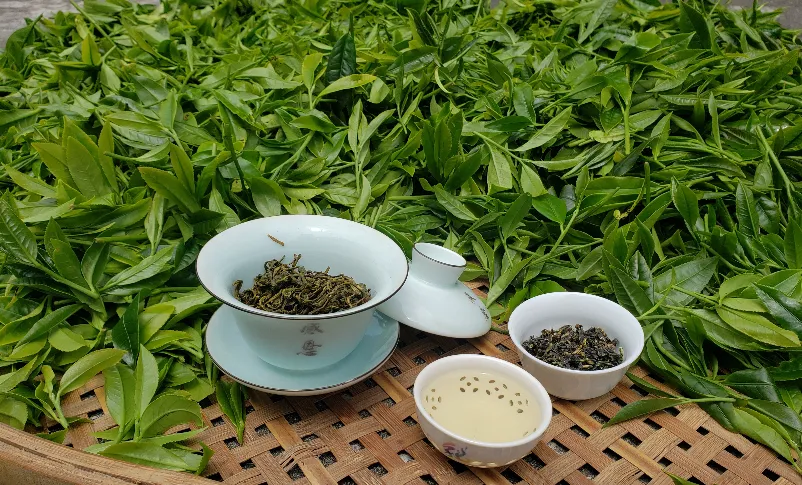
How to Brew the Perfect Cup of Shaoguan Black Tea
Shaoguan black teas — especially those made from the region’s signature Danxia #1 and Danxia #2 cultivars — offer something genuinely special: a naturally occurring almond-like aroma alongside the malty depth expected from Chinese black tea (hongcha). But getting the most out of these nuanced leaves requires the right approach to temperature, timing, and technique. Here’s how to brew them, whether you’re at home on a weekday morning or hosting a weekend tea session with friends.
What You’ll Need
The beauty of black tea is its flexibility. You don’t need specialized equipment for a good cup, but a few key items will dramatically improve your results:
For Western-style brewing (single cup, familiar approach):
- **Teapot or mug with infuser** — ceramic or borosilicate glass is best. Metal infusers (especially aluminum) can impart a slight metallic taste. Stainless steel mesh infusers are fine but avoid fine-mesh baskets that restrict water flow around the leaves
- **Kettle with temperature control** — this is the single biggest upgrade you can make to your tea brewing. A variable-temperature gooseneck or standard electric kettle costs $30–60 and eliminates the guesswork from water temperature
- **Kitchen thermometer** — if you don’t have a variable-temperature kettle, an instant-read thermometer ($10–15) works just as well
- **Timer** — your phone’s built-in timer is perfect. Tea timing matters in seconds, not minutes
- **Filtered water** — tap water with high chlorine or mineral content can mask the subtle almond flavors in Shaoguan black tea. A basic carbon filter (Brita, PUR, or built-in refrigerator filter) makes a noticeable difference
- **Good cup or mug** — pre-warmed, ideally ceramic or porcelain. Glass mugs look beautiful but lose heat faster
For Gongfu brewing (multiple infusions, traditional Chinese method):
- **Gaiwan (盖碗)** — a lidded bowl typically 100–150 ml capacity. Porcelain gaiwans cost $10–25 and are the most forgiving vessel for beginners. They don’t absorb flavor, so you can brew any tea type without cross-contamination
- **Small Yixing teapot (optional)** — unglazed Yixing clay pots absorb tea oils over years of use, seasoning with the tea’s character. Dedicate one pot to Shaoguan black tea only
- **Gongfu tea tray** — a shallow tray with a raised surface, usually bamboo or ceramic, that catches waste water from rinsing and accidental overflow. A simple draining tray costs $15–30
- **Small tasting cups (品尝杯)** — 30–50 ml each. The small size keeps each infusion hot while you drink it quickly, and allows you to appreciate the aroma as it concentrates in the small opening
- **Tea pitcher (公道杯 / gongdaobei)** — a glass pitcher that collects each infusion before pouring into individual cups. This equalizes the liquor strength across servings and prevents the last-poured cup from being stronger than the first
- **Tea scale accurate to 0.1 g** — volume-based measurements (teaspoons) are inconsistent because leaf density varies by curl and size. A $15 digital pocket scale removes this variable entirely
- **Strainer (茶滤)** — a small mesh strainer that sits on top of the pitcher or cup to catch stray leaf particles
If you’re new to Chinese tea, start with Western style. It requires no new equipment beyond a thermometer, and the results are excellent. Gongfu is a rewarding practice — almost meditative once you develop the rhythm — but it’s not necessary for a great cup of tea.
The Standard Brew (Western Style)
This method produces a single, strong 8–12 oz (240–350 ml) cup — familiar territory for anyone who drinks coffee or standard bagged tea. It’s ideal for mornings, work-from-home sessions, or when you want a robust cup without ceremony.
Step 1: Heat the water
Bring fresh, filtered water to **195°F (90°C)** . This temperature is not negotiable for Shaoguan black tea. Boiling water at 212°F (100°C) will scorch the delicate benzaldehyde compounds responsible for the almond aroma, turning the cup harsh and flat. If you don’t have a temperature-control kettle, bring water to a rolling boil, then let it sit off the heat for **60–90 seconds** before pouring. The water should be steaming vigorously but not bubbling.
Step 2: Warm the vessel
Pour a small amount of hot water into your teapot or mug, swirl it around, and discard. This is not optional — it prevents the ceramic or glass from stealing 15–20°F from your brewing water, which would drop the effective extraction temperature below the ideal range. A cold mug can drop 195°F water to 175°F within 30 seconds of pouring.
Step 3: Measure the leaves
Use **1 teaspoon (about 2.5–3 grams)** of loose-leaf Shaoguan black tea per 8 oz (240 ml) of water. For a standard 12 oz mug, that’s roughly 1.5 teaspoons. If you’re using a scale, aim for 3 grams per 240 ml. Whole-leaf black teas like Danxia Red need more volume than broken-leaf teas because the intact leaves take up more space.
Step 4: Steep with precision
Pour the hot water over the leaves and start your timer immediately:
- **3 minutes** for a medium-bodied, balanced cup with clear almond and floral notes prominent
- **3.5 minutes** for a fuller extraction with more cocoa and malt character
- **4 minutes** for a robust, deep cup with pronounced dried-fruit sweetness
Do not exceed 5 minutes under any circumstances. Beyond 5 minutes, bitter tannins (theaflavins and thearubigins) over-extract and mask the tea’s natural sweetness. The liquor will turn dark, astringent, and lose the distinctive Shaoguan almond character.
Step 5: Remove the leaves immediately
Remove the infuser or strain the tea into your cup. Do not leave the leaves in the hot water, even for “just a minute” while you prepare something. The extraction continues as long as the leaves are in contact with hot water, and that last-minute difference can push the cup from excellent to bitter.
Step 6: Drink plain (at least for the first few sips)
Good Shaoguan black tea needs no additions. Take your first few sips without milk or sugar to appreciate the full flavor profile — the almond note, the cocoa undertones, the long sweet finish. If you prefer milk tea, a splash of whole milk or oat milk complements the maltier aspects, and a small amount of honey or raw sugar works well with the caramel notes. But the tea deserves to be tasted unadorned first.
The Gongfu Method (Chinese Style)
Gongfu (工夫茶, “skillful brewing”) uses more leaf and shorter steeps to extract the full flavor arc of the tea across multiple infusions — typically 6–10 rounds with a high-quality Shaoguan black tea. Each infusion reveals different facets: the first is light and floral, the middle steeps are rich and full-bodied, and the later rounds become sweet and lingering. It transforms a cup of tea into a 20–30 minute experience.
Step 1: Water temperature
Heat water to **195°F (90°C)** — same target as Western brewing. The same rules about avoiding boiling water apply regardless of the vessel or technique.
Step 2: Warm everything
Rinse your gaiwan or teapot, tea pitcher, and drinking cups with hot water. In gongfu practice, this step is considered essential — it maintains brewing temperature, prevents the tea from cooling too quickly in small vessels, and is part of the ritual of preparation. Some practitioners say it also “cleanses the spirit,” but practically, it ensures every surface the tea touches is at the correct temperature.
Step 3: Measure the leaves
Use **5 grams of tea** for a 100–150 ml gaiwan — this works out to roughly a **1:15 to 1:20 leaf-to-water ratio**. By volume, the dry leaves should fill roughly one-third to one-half of the gaiwan. Don’t worry if this looks like a lot of leaf — you’re going to extract it multiple times.
Step 4: Rinse the leaves
Pour hot water over the leaves and immediately pour it out through the gaiwan’s lid gap into the tea tray. This “awakening rinse” (醒茶 / xing cha) removes any fine dust from handling, softens the leaves, and begins the unfurling process. The rinse water is not drunk. For compressed teas, let the rinse sit for 10–15 seconds before pouring; for loose-leaf Shaoguan black tea, a quick pour-through is sufficient.
Step 5: Brew, infusion by infusion
| Infusion # | Water Temp | Steep Time | What to Expect |
|---|
|—|—|—|—|
| 1 | 195°F / 90°C | 15 seconds | Light, floral opening — the almond aroma first appears |
|---|---|---|---|
| 2 | 195°F / 90°C | 20 seconds | Full flavor develops — malt and cocoa emerge alongside the almond |
| 3 | 195°F / 90°C | 25 seconds | Peak flavor — rich, thick mouthfeel, prominent sweet finish, dried fruit notes |
| 4 | 195°F / 90°C | 30 seconds | Still very strong — more mineral character and stone-fruit sweetness |
| 5 | 200°F / 93°C | 40 seconds | Lingering sweetness; the almond note fades slightly, honey appears |
| 6 | 200°F / 93°C | 50 seconds | Gentle decline — still flavorful, more woody and sweet |
| 7+ | 200°F / 93°C | 60–90 seconds | Light but still pleasant — extend steep time and enjoy the tail end |
Add 5–10 seconds to each steep if you prefer a stronger, more traditional gongfu style.
Step 6: Decant completely
Pour each infusion through the strainer into the tea pitcher, then distribute into the small cups. Aim to drain the gaiwan or pot completely after each steep — any residual water will continue extracting from the leaves and throw off the timing of the next infusion. The lid can be left slightly ajar between infusions to let the leaves breathe.
Step 7: Savor the evolution
Drink each small cup slowly, noting how the flavor profile changes from the first infusion through the seventh. This is where fine Shaoguan black tea truly excels — the dynamism across infusions is remarkable, and no two steeps taste exactly the same. The progression from light floral → rich malty → sweet lingering is a hallmark of well-crafted black tea from quality cultivars.
Cold Brew Method
Cold brewing is the easiest method by far, requiring no equipment beyond a pitcher, and it produces an exceptionally smooth, naturally sweet iced tea with zero bitterness and no astringency.
Ratio:** 1 tablespoon (about 5 grams) of leaves per 500 ml (16–17 oz) of cold, filtered water. This is a higher leaf ratio than most cold-brew recipes because the cold extraction is less efficient than hot.
Instructions:
1. Place the tea leaves in a pitcher or large jar (a 1-quart mason jar works perfectly)
2. Pour cold water — either room temperature straight from the filter or refrigerated — over the leaves
3. Cover and place in the refrigerator for **8–12 hours**. Overnight is perfect — start it before bed, strain in the morning
4. Strain out the leaves through a fine-mesh sieve or cheesecloth
5. Pour over ice and enjoy
That’s it. No heat, no thermometer, no timer stress. The slow, cold extraction pulls out sweet, fruity, and floral compounds — including L-theanine (the calm-focused amino acid) — while leaving behind the bitter tannins and catechins that require hot water to dissolve. The result is a bright, crisp, naturally sweet tea that needs no sweetener, sugar, or honey.
Storage:** Cold-brewed Shaoguan black tea keeps in the refrigerator for 3–4 days. The flavor will deepen slightly over the first 24 hours and then stabilize.
Pro tip:** A squeeze of fresh lemon or a slice of orange brightens the fruit notes. A sprig of mint makes it a refreshing summer drink. Both additions complement — rather than mask — the natural almond character.
Tips for the Almond Aroma Teas
Shaoguan’s Danxia #1 and Danxia #2 black teas are prized for a distinctive **almond-like aroma** — a natural result of benzaldehyde, the same compound that gives bitter almonds their characteristic scent. This volatile compound is heat-sensitive and easy to destroy with careless brewing.
The golden rule: **Never use boiling water.** Here’s the chemistry:
- At 212°F (100°C), benzaldehyde volatilizes rapidly — within seconds, a significant portion of it escapes as vapor rather than dissolving into your cup
- At prolonged high temperatures, benzaldehyde can thermally degrade into benzoic acid and other compounds that contribute a flat, slightly medicinal taste
- The ideal temperature range for preserving benzaldehyde in black tea is **185–195°F (85–90°C)**
- For maximum almond expression, start at **185°F (85°C)** . The risk of underextraction at this lower temperature is minimal if you extend the steep by 30 seconds or, for gongfu, increase the initial steep to 20-25 seconds
If you specifically chose a Shaoguan black tea for its almond character — like the Snow Flower Rock or the Danxia Red — start at 185°F and adjust upward on your next session based on taste preferences. Individual batches and personal taste preferences vary, and a 5°F difference can shift the balance significantly.
Additional tip for almond preservation:** Store your Shaoguan black teas in an airtight, opaque container away from heat, light, and strong odors (especially spices and coffee). Benzaldehyde is both volatile and adsorptive — it can escape your tea and be absorbed by other foods in your pantry. A dedicated tea tin or Mylar bag with a one-way valve is ideal for long-term storage.
Serving & Pairing
Shaoguan black tea’s distinctive flavor profile — cocoa, malt, dried fruit, almond — makes it a versatile and rewarding companion for food. Unlike some delicate teas that get overwhelmed by food, Shaoguan black tea stands up to robust flavors while complementing subtler ones:
- **Dark chocolate (70%+ cacao):** The bitterness of high-cacao chocolate plays against the tea’s natural sweetness in a flavor contrast that elevates both elements. Try a square of 75% dark chocolate with infusion #3 of a gongfu session for the peak pairing experience
- **Roasted almonds, pecans, or walnuts:** Nut-on-nut synergy. The almond notes in the tea echo the nuts themselves, creating a harmonious pairing where neither dominates
- **Dried figs, apricots, dates, or prunes:** The tea’s dried-fruit undertones — plum, raisin, and date-like sweetness from the Maillard reaction during black tea processing — resonate with concentrated fruit sugars. This is especially effective with the 4th–5th gongfu infusions
- **Aged hard cheese (aged Gouda, Comté, 2-year cheddar):** Black tea’s tannins cut through cheese fat in the same way that tannic red wine does with cheese. The almond notes in the tea echo the nutty crystallization in aged Gouda particularly well
- **Butter cookies, shortbread, or madeleines:** Simple, not-too-sweet butter-based pastries let the tea take center stage without competing flavors
- **Smoked meats (prosciutto, speck):** The tea’s maltiness and slight smokiness from oxidation complements cured, smoked meats surprisingly well — an unconventional pairing that most tea drinkers haven’t tried
For an afternoon tea spread, try Shaoguan black tea where you’d normally serve Darjeeling first flush or Assam. It holds its own with milk and sugar if that’s your preference, but most devotees drink it straight to preserve the distinctive almond note that makes these teas different from anything else on the shelf.